


What Is an HDPE MJ Adapter?
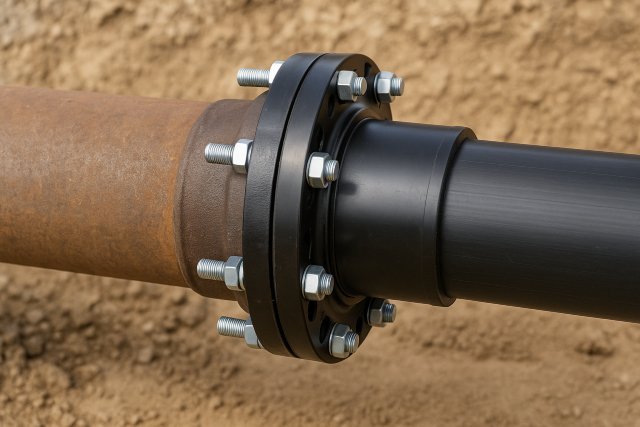
In modern piping systems, compatibility and durability are key. The HDPE MJ adapter (Mechanical Joint Adapter) is a critical fitting designed to connect high-density polyethylene (HDPE) pipes to ductile iron pipes (DIP), valves, or fittings with a mechanical joint (MJ) connection.
These adapters provide a leak-free, corrosion-resistant transition between different materials — solving one of the most common challenges in utility, water, and gas distribution systems.
If you’re looking for a reliable connection solution, the HDPE MJ adapter offers unmatched strength, flexibility, and longevity.
Why Choose HDPE MJ Adapter for Ductile Iron Pipe Connections?
1. Seamless Compatibility
HDPE MJ adapters are engineered to bridge the gap between flexible HDPE pipes and rigid ductile iron pipes. This makes them ideal for rehabilitation projects, new installations, and system upgrades.
2. Corrosion and Chemical Resistance
Unlike metal components, HDPE does not corrode, rust, or pit. This ensures a longer service life—especially in underground or harsh chemical environments.
3. Ease of Installation
The MJ adapter’s design allows for a simple mechanical connection without special fusion tools. It reduces installation time, labor costs, and downtime.
4. High Strength and Flexibility
HDPE’s elastic nature absorbs pressure surges and ground movement, preventing joint failure. Combined with the ductile iron mechanical joint, it ensures structural integrity under variable conditions.
Key Features of an HDPE MJ Adapter
| Feature | Description |
|---|---|
| Material | High-Density Polyethylene (HDPE) with molded insert stiffeners |
| Connection Type | Mechanical Joint (MJ) for ductile iron pipe compatibility |
| Sizes | Commonly available in 2″ – 36″ diameters |
| Pressure Rating | Typically rated up to 230 psi |
| Standards | Meets AWWA C906 and ASTM D3261 |
| Applications | Water, wastewater, gas, and industrial piping |
How the HDPE MJ Adapter Works
An HDPE MJ adapter includes two main components:
- HDPE stub end (or spigot) that connects to the HDPE pipe (via butt fusion).
- Mechanical joint gland and gasket that connect to the ductile iron pipe or fitting.
When assembled, the gland compresses the gasket against the mating surface, creating a tight, pressure-resistant seal. This allows efficient jointing between HDPE and ductile iron systems — without welding or threading.
Applications of HDPE MJ Adapters
These adapters are widely used in:
- Municipal water distribution
- Sewer and wastewater systems
- Industrial piping networks
- Mining operations
- Irrigation and agricultural systems
- Gas distribution lines
Each application benefits from HDPE’s flexibility and mechanical joint compatibility, ensuring performance and reliability in the long term.
Advantages Over Traditional Connection Methods
| Traditional Method | Challenges | HDPE MJ Adapter Solution |
|---|---|---|
| Threaded Couplings | Leak potential, corrosion | Leak-free, corrosion-proof |
| Flanged Connections | Requires precise alignment | Flexible and forgiving |
| Welding or Fusion | Time-consuming, expensive | Quick mechanical connection |
The HDPE MJ adapter simplifies mixed-material systems, ensuring cost-efficiency and operational safety.
Installation Guide for HDPE MJ Adapter
Step 1: Prepare the pipe ends (HDPE and ductile iron).
Step 2: Butt-fuse the HDPE stub end to the HDPE pipe.
Step 3: Insert the MJ gasket into the ductile iron bell or fitting.
Step 4: Insert the HDPE adapter spigot into the gasket.
Step 5: Secure using the MJ gland and bolts. Tighten evenly.
Step 6: Pressure test the joint before service.
Pro Tip: Always follow manufacturer specifications for torque values and alignment to prevent leaks.
FAQs About HDPE MJ Adapters
1. What sizes are available for HDPE MJ adapters?
They typically range from 2 inches to 36 inches, accommodating most water and industrial systems.
2. Can HDPE MJ adapters be used for gas pipelines?
Yes, but ensure they are rated and certified for gas distribution applications per ASTM standards.
3. Are HDPE MJ adapters reusable?
While durable, they are not typically reusable due to gasket compression and sealing integrity requirements.
4. How long do HDPE MJ adapters last?
With proper installation, they can last 50 years or more — depending on environmental conditions and pressure cycles.
Comparing HDPE MJ Adapters vs. Flange Adapters
| Feature | HDPE MJ Adapter | HDPE Flange Adapter |
|---|---|---|
| Connection Type | Mechanical Joint | Bolted Flange |
| Ease of Installation | Faster, fewer tools | Requires bolt torqueing |
| Maintenance | Minimal | Occasional bolt retightening |
| Best Use Case | Ductile iron transitions | Steel or PVC flanges |
For ductile iron pipe transitions, the HDPE MJ adapter is often the preferred choice due to its speed and reliability.
Best Practices for Long-Term Performance
- Use approved MJ gaskets and glands compatible with HDPE.
- Avoid overtightening bolts to prevent gasket deformation.
- Ensure proper alignment between HDPE and ductile iron pipes.
- Conduct periodic inspections for underground joints.
- Always follow AWWA C111/A21.11 installation guidelines.
Real-World Case Study
A municipal water utility in Texas replaced corroded ductile iron couplings with HDPE MJ adapters. The result:
- 60% reduction in maintenance costs
- Zero leaks after 3 years
- 40% faster installation time compared to flanged joints
This showcases the real-world reliability of HDPE MJ adapters for large-scale infrastructure projects.
Conclusion: Why the HDPE MJ Adapter Is the Smart Choice
The HDPE MJ adapter stands as the ultimate solution for connecting HDPE pipes to ductile iron pipe systems — delivering unmatched durability, flexibility, and performance.
Whether you’re working on municipal water lines, industrial systems, or retrofit projects, this adapter ensures seamless compatibility and long-term reliability.
Investing in HDPE MJ adapters today means fewer leaks, lower maintenance, and a more sustainable infrastructure tomorrow.














Leave a comment