

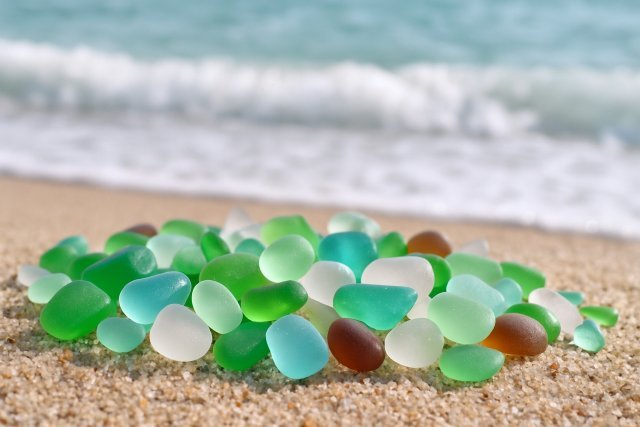

If you’ve ever strolled along a beach and spotted a smooth, frosted shard of colorful glass, you might’ve wondered: What is sea glass, and how does ordinary broken glass turn into something so beautiful? Sea glass is more than just a beachcomber’s treasure — it’s a naturally recycled material shaped by decades of waves, sand, and time.
In this detailed guide, you’ll learn what sea glass is, how it forms, why its colors vary, and how to identify real versus fake sea glass. We’ll also cover the best beaches to find it, common myths, and tips for collectors.
What Is Sea Glass? (Simple Definition)
What is sea glass is weathered glass that has been naturally smoothed, frosted, and shaped by the ocean over many years — sometimes decades.
It typically begins as discarded bottles, jars, tableware, or even old shipwreck debris that breaks into pieces and enters the tidal cycle. Over time, wave action, abrasion from sand, and chemical reactions with salt water transform sharp shards into smooth, gem-like pieces.
Key Characteristics of Genuine Sea Glass
- Frosted, matte surface
- Rounded edges
- Pitted or textured feel
- No sharp corners
- Weathered color fading or variation
- Slight irregular shape
How Is Sea Glass Formed? The Full Process Explained
1. It Begins as Ordinary Glass
Most sea glass starts as:
- Beverage bottles
- Medicine bottles
- Perfume bottles
- Household jars
- Ship lanterns or navigation lights
- Automotive glass
- Tableware (plates, cups)
- Industrial glass waste
Sources of sea glass include:
- Historical dumping sites
- Old coastal settlements
- Shipwrecks
- Storm-washed landfills
- Tourist litter (a modern but less desirable source)
2. Glass Breaks and Enters the Ocean System
When glass reaches the shoreline or ocean floor, waves break it into smaller fragments. These fragments can remain buried, tossed in tidal zones, or circulate in currents.
3. Wave Action Softens the Edges
Constant tumbling grinds down the sharp edges. This mechanical weathering is responsible for the softened, pebble-like shape.
Factors affecting shaping:
| Factor | Effect |
|---|---|
| Wave intensity | Faster rounding and smoothing |
| Sand grain size | Finer abrasion creates smoother surfaces |
| Beach slope | Steeper slopes accelerate tumbling |
| Time spent in surf | Longer exposure = better quality sea glass |
On average, it can take 20–50 years to produce fully weathered sea glass.
4. Chemical Etching Creates the Frosted Surface
Saltwater, pH changes, and abrasion cause a process called hydration, which roughens the surface and forms a frosty appearance. This is one of the main markers of authentic sea glass.
Artificially “tumbled” glass often lacks:
- True pitting
- Chemical frosting
- Natural texture variation
Where Does Sea Glass Come From?
Many famous sea-glass beaches once sat near:
- 19th and early 20th-century dumping sites
- WWII military bases
- Old glass factories
- Fishing villages
- Shipping lanes
A few examples include:
- Fort Bragg (California, USA)
- Seaham Beach (UK) — known for multicolored “end-of-day” glass
- Hawaii’s Glass Beach
- Nova Scotia (Canada)
Note: Always follow local rules—some beaches allow collecting small amounts; others forbid removal entirely.
Why Does Sea Glass Come in Different Colors?
Sea glass colors depend on the original source glass. Some colors are extremely common, while others are incredibly rare.
Common Colors (Easiest to Find)
- White/Clear — from soda bottles, jars
- Brown/Amber — beer bottles, medicine bottles
- Green — wine bottles, soft-drink bottles
These colors make up 90%+ of sea glass finds.
Uncommon Colors
- Aqua — vintage soda bottles
- Soft green — pre-1930s household glass
- Cobalt blue — medicine, Noxzema jars, old apothecary bottles
- Olive green — antique wine bottles
Rare Colors
Rare sea glass often originates from discontinued or historical products.
Examples:
- Red — navigation lights, vintage tableware
- Orange — extremely rare, often from industrial warning lights
- Black glass — early wine/beer bottles (1700s–1800s)
- Purple (amethyst) — clear glass exposed to UV light, pre-1910
- Teal — antique soda and mineral bottles
Collectors value these colors highly.
Types of Sea Glass
Understanding the types can help you correctly identify and classify your finds.
1. Natural Sea Glass
Naturally formed through wave action and weathering.
2. Beach Glass
Technically similar to sea glass but formed in:
- Lakes
- Rivers
- Freshwater environments
The frosting is usually lighter due to the absence of saltwater etching.
3. Artificial or Tumbled Glass
Created by tumbling broken glass in a machine with sand.
This version:
- Is smooth but lacks true frosting
- Has uniform shapes
- Often appears “too perfect”
- Uses bright modern colors rarely found naturally
Collectors consider genuine sea glass far more valuable.
How to Identify Real Sea Glass (vs. Fake)
Use this quick checklist:
Frosted appearance
Not shiny, unless wet.
Pitted surface
Tiny natural indentations.
Irregular shape
Natural sea glass is never perfectly oval or round.
Rounded edges
No sharp corners.
Color fading
Subtle variability caused by UV exposure.
“C-shape” curves
Indicates naturally broken bottle glass.
Where to Find Sea Glass
Some beaches produce more sea glass due to wave activity, historical glass production, or old dumping sites.
Best Conditions for Sea Glass Beaches
- Strong wave action
- Rocky or pebbled shores
- Steep beach slopes
- Tidal pools
- Areas with historical garbage dumps
Best Times to Search
- Low tide
- After storms
- During winter months (heavier surf)
- Early morning (before other collectors arrive)
Is Sea Glass Rare Today?
Yes — sea glass is becoming harder to find.
Reasons include:
- Decline of glass packaging
- Modern recycling replacing dumping
- Coastal cleanup efforts
- Closure of old glass factories
- Environmental regulations
- Beaches being picked clean by collectors
Some estimate natural sea glass production has dropped by over 80% since the mid-1900s.
Uses for Sea Glass
Sea glass is treasured for:
- Jewelry (necklaces, bracelets, rings)
- Home décor
- Art mosaics
- Aquariums
- Photography
- Souvenirs
- Collecting and trading
Artists often seek rare colors for premium designs.
Frequently Asked Questions (SEO-Optimized FAQ Section)
1. What is sea glass made of?
Sea glass is made of broken glass from bottles, jars, tableware, windows, and other glass objects that have been naturally weathered by the ocean.
2. How long does it take for sea glass to form?
It typically takes 20–50 years to form fully frosted, smooth sea glass.
3. What is the rarest color of sea glass?
Orange sea glass is considered the rarest, followed by red, yellow, black, and turquoise varieties.
4. Is collecting sea glass legal?
It depends on local laws. Some beaches allow personal collecting, while others prohibit removal. Always check regional regulations.
5. Can sea glass form in lakes?
Yes. This is called beach glass, and it forms in freshwater environments but lacks the salt-etched frosting of ocean sea glass.
Conclusion: What Is Sea Glass?
To summarize: What is sea glass? It’s glass that has been transformed by the ocean into beautifully frosted, smoothed pieces over decades — or even centuries. Through natural tumbling, chemical etching, and the movement of tides, ordinary broken glass becomes a treasured collectible. Whether you’re a passionate beachcomber or simply curious, understanding how sea glass forms gives you a deeper appreciation for its beauty and rarity.










Leave a comment