

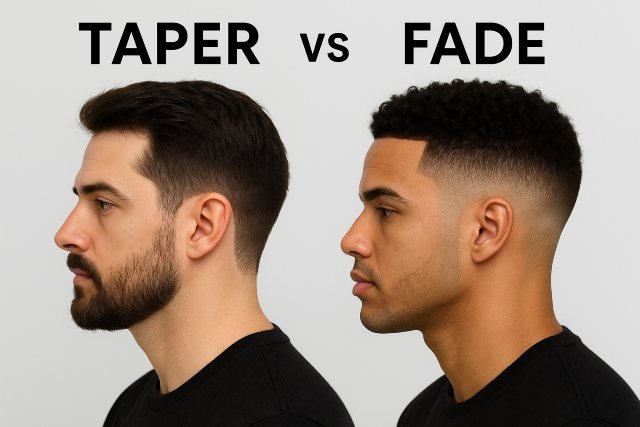

When choosing a modern men’s haircut, the debate around taper vs fade is one of the most common. Both are clean, stylish, and versatile, but the two cuts differ in technique, appearance, and overall vibe. Whether you’re looking for a subtle, classic look or a sharp, ultra-modern finish, understanding the differences helps you pick a cut that fits your lifestyle, face shape, and hair texture.
In this guide, we break down everything you need to know — definitions, comparisons, styling advice, maintenance tips, examples, and FAQs — to help you decide between a taper and a fade.
What Is a Taper? (Definition & Key Traits)
A taper haircut gradually reduces the length of your hair from the top down to the neckline. The sides and back progressively shorten but never go completely bald.
Taper: Key Characteristics
- Hair slowly transitions from longer to shorter.
- Sideburns and neckline stay clean but not skin-tight.
- Works for professional, conservative, or textured styles.
- Looks good on straight, wavy, and curly hair.
Who the Taper Suits Best
A taper is ideal for:
- Professionals needing a clean, office-friendly look
- Men who want low maintenance styles
- Those with longer hairstyles on top (quiffs, pompadours, curls)
Its subtlety makes it timeless and versatile.
What Is a Fade? (Definition & Key Traits)
A fade haircut is a high-contrast style where the sides and back are shaved down to the skin at some point. The fade creates a seamless transition from thick hair on top to nearly bald areas lower down.
Fade: Key Characteristics
- Extremely short or bald areas near the bottom.
- High contrast between top and sides.
- Looks sharp, modern, and edge-focused.
Who the Fade Suits Best
A fade is perfect for:
- Men who prefer sharp, trendy looks
- Afro, textured, and thick hair types
- Younger men or anyone who likes bold styles
- Short-to-medium top styles like crops, buzz cuts, or waves
Taper vs Fade: Side-by-Side Comparison
To make the differences clear, here’s a detailed comparison table:
| Feature | Taper | Fade |
|---|---|---|
| Transition | Gradual, subtle | Sharp, dramatic |
| Lowest Hair Length | Short, but not bald | Bald or nearly bald |
| Professional Look | Highly professional | Trendy, casual, bold |
| Maintenance | Low | Medium to high |
| Best For | Business cuts, longer tops | Modern cuts, textured hair |
| Popular Variations | Classic taper, low taper | Skin fade, mid fade, high fade |
Types of Tapers
1. Low Taper
A gentle taper around the ears and neckline. Good for medium-length hairstyles.
2. High Taper
Starts higher on the head, offering slightly more contrast without going full fade.
3. Taper With a Part
A clean parting line accentuates structure — popular for business styles.
4. Curly Hair Taper
Keeps curls natural on top while cleaning the sides for a balanced shape.
Types of Fades
1. Low Fade
Begins just above the ears — subtle but still modern.
2. Mid Fade
Starts at the temples. Balanced and extremely popular.
3. High Fade
Begins high on the head and creates the most contrast.
4. Skin Fade
Takes the bottom zone to bare skin. Crisp and bold.
5. Burst Fade
Tapers around the ear but spreads outward, great for mullets and textured tops.
6. Drop Fade
The fade “drops” behind the ear for added contour.
How to Choose Between a Taper vs Fade
Your choice should depend on face shape, hair type, lifestyle, and personal style.
By Face Shape
- Round faces: High fade for elongating effect
- Square faces: Low taper or mid fade
- Oval faces: Any style works
- Heart-shaped faces: Taper to maintain proportion
- Long faces: Low fade or taper to avoid exaggerating length
By Hair Type
- Straight hair: Taper or low fade looks polished
- Wavy hair: Mid fade or taper accentuates texture
- Curly hair: High taper for shape, or high fade for boldness
- Coily/Afro hair: Skin fade, burst fade, or mid fade works exceptionally well
By Lifestyle
- Professional setting: Taper or low fade
- Active lifestyle / gym: Skin fade or high fade
- Fashion-forward: High fade or drop fade
- Low maintenance: Classic taper
Styling Tips for Taper vs Fade
Taper Styling Tips
- Use light pomade or matte clay for texture.
- Blow-dry with a round brush for volume.
- Keep neckline neat with regular trims.
- Combine with comb-overs, side parts, quiffs, or curls.
Fade Styling Tips
- Use strong-hold products for crops and short textured styles.
- Moisturize the scalp if you get a skin fade.
- Keep edges sharp with weekly touch-ups.
- Great with lineups, waves, buzz cuts, and modern crops.
Best Hairstyle Examples for Each Cut
Best Taper Examples
- Side-part taper for professionals
- Messy top with taper for casual looks
- Curly taper for balanced shape
- Classic taper + beard blend for mature men
Best Fade Examples
- High skin fade + crop top
- Mid fade + waves (excellent for textured hair)
- Buzz cut + skin fade
- Low fade + pompadour
Maintenance: Taper vs Fade
Taper Maintenance
- Trim every 3–5 weeks
- Lower upkeep
- Grows out evenly
Fade Maintenance
- Trim every 1–2 weeks
- Edges and bald areas grow quickly
- More frequent barber visits
FAQs: Featured Snippet Optimized
Is a taper or fade better?
A taper is better for a clean, subtle, and professional look. A fade is better for a sharp, modern, and high-contrast style. Choose based on your hair type and lifestyle.
Is a taper longer than a fade?
Yes. A taper never goes completely bald, while a fade often does.
Which lasts longer: taper or fade?
A taper lasts longer because it grows out more evenly and requires fewer touch-ups.
Which looks more professional?
A taper is considered more professional in most workplaces.
Does a fade damage hair?
No. However, frequent shaving for skin fades can irritate the scalp if not moisturized.
Conclusion
Choosing between a taper vs fade ultimately comes down to how bold you want your look to be. A taper offers a clean, classic, and low-maintenance style, while a fade delivers that sharp, modern edge. Both are stylish and versatile — you just need the right variation to match your hair type, face shape, and lifestyle.
No matter which cut you choose, work with a skilled barber who understands your goals and can guide you toward a result that’s both flattering and easy to maintain.












Leave a comment