

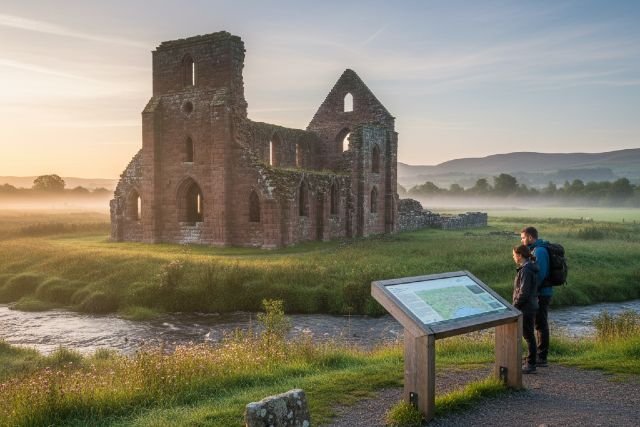

Shap Abbey is a historic medieval ruin located in the tranquil Eden Valley of Cumbria. Known for its peaceful setting beside the River Lowther, Shap Abbey attracts visitors interested in English history, architecture, and countryside walks. This guide provides detailed visitor information, historical background, and location details to help you plan a rewarding visit to Shap Abbey.
What Is Shap Abbey?
Shap Abbey is the remains of a Premonstratensian monastery founded at the end of the 12th century. Unlike larger and more commercial abbey sites, Shap Abbey offers a quiet and reflective atmosphere. The ruins stand as a reminder of monastic life in medieval England and are preserved today as a heritage site open to the public.
The History of Shap Abbey
Shap Abbey was founded in 1199 by Thomas, son of Gospatric, after the monastic community relocated from Preston Patrick. The Premonstratensian canons who lived there followed a disciplined religious life while also working the surrounding land and serving nearby communities.
During the Middle Ages, Shap Abbey developed into a stable religious house, benefiting from fertile land and access to water from the River Lowther. The abbey supported itself through farming, livestock management, and local trade. Like many religious institutions, Shap Abbey was dissolved in 1540 under the orders of King Henry VIII. After its closure, much of the stone was removed for reuse, leaving the ruins visible today.
Architectural Features of Shap Abbey
Although only partially standing, Shap Abbey still reveals much about medieval monastic design. Visitors can see the foundations of the abbey church, parts of the cloister where daily life once revolved, and remnants of domestic buildings. The distinctive red sandstone gives the ruins a warm appearance that contrasts beautifully with the surrounding greenery.
Location of Shap Abbey
Shap Abbey is located just south of the village of Shap in Cumbria, close to the M6 motorway. Its position in the Eden Valley makes it easily accessible while still retaining a secluded, rural feel. The surrounding countryside enhances the sense of stepping back in time.
How to Get to Shap Abbey
Shap Abbey is easiest to reach by car, with the nearest motorway access at Junction 39 of the M6. From there, local roads lead directly toward Shap village and the abbey site. Visitors using public transport can travel by train to Penrith and continue by bus or taxi. A scenic walk from Shap village also leads to the abbey and is popular with hikers.
Shap Abbey Visitor Information
Shap Abbey is open to visitors throughout the year and does not charge an entry fee. Access is available during daylight hours, and there is no need to book in advance. Basic information boards provide historical context, although there are no on-site facilities such as toilets or cafés, so visitors should plan accordingly.
Best Time to Visit Shap Abbey
The best time to visit Shap Abbey is during spring and summer when the surrounding landscape is at its most vibrant. Autumn also offers impressive scenery with fewer visitors, while winter visits provide a dramatic atmosphere, although paths may be muddy or uneven.
Things to Do Near Shap Abbey
A visit to Shap Abbey can be combined with exploring nearby attractions such as Shap village, the Lake District National Park, and Lowther Castle. The area is also popular with walkers, and several countryside trails pass close to the abbey site.
Photography at Shap Abbey
Shap Abbey is a popular spot for photography due to its scenic riverside location and historic stonework. Early morning and late afternoon light enhance the textures of the ruins and the surrounding landscape, making these times ideal for capturing images.
Family and Accessibility Information
Shap Abbey is suitable for families and offers open space for children to explore, although adult supervision is recommended due to uneven ground. Accessibility is limited for wheelchair users, but the ruins can still be viewed from nearby paths.
Frequently Asked Questions About Shap Abbey
Shap Abbey is free to visit and managed by English Heritage. Most visitors spend between thirty minutes and an hour exploring the site. While there are no guided tours, the information boards provide helpful historical insight.
Conclusion
Shap Abbey is a peaceful and historically rich destination that offers a unique glimpse into medieval monastic life. Its accessible location, scenic setting, and free entry make it an excellent stop for anyone exploring Cumbria. Whether you are interested in history, photography, or countryside walks, Shap Abbey is well worth a visit.















Leave a comment