

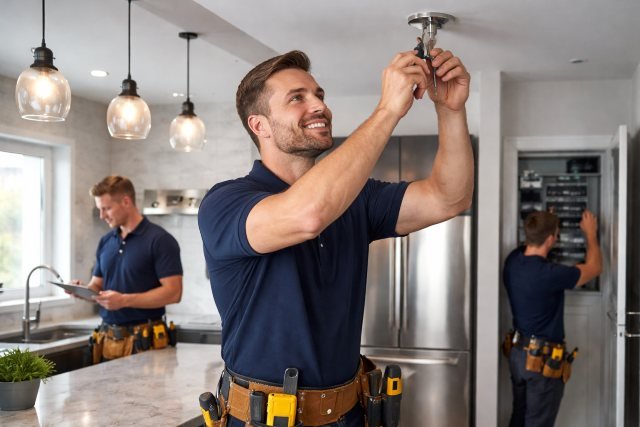

If you’re a homeowner in Sweden, electrical work is one of those things you want done once, done right, and done safely. Närkes Elektriska is a long-established name associated with electrical installation and maintenance work in the Örebro region, with roots going back to the early 1900s and ties to the broader NEA group.
This guide explains what “complete home electrical services” actually includes, when to call a professional, how to plan upgrades like EV charging and smart home systems, and what to expect during an inspection — using Sweden-specific safety guidance and real fire-risk data to keep the advice practical.
What is Närkes Elektriska, and why homeowners look for them?
Närkes Elektriska (often referred to as NEA) is described as an electrical company founded in Örebro in 1931, originally connected to ASEA, later operating independently and working in electrical installation and maintenance (and related electrical materials sales).
For homeowners, that background typically matters for two reasons:
First, home electrics are a safety-critical system. Sweden’s Electrical Safety Authority (Elsäkerhetsverket) repeatedly emphasizes that electricity can cause serious injury and fires if work is done incorrectly — and that homeowners are responsible for ensuring work is done with the right expertise.
Second, houses and apartments are constantly changing: renovations, new appliances, heat pumps, induction hobs, EVs, solar panels, and home offices all increase demand on wiring and protective devices. If the system isn’t designed for that reality, you end up with nuisance tripping at best — and real hazards at worst.
Why electrical safety matters in Swedish homes (with real numbers)
Home fires are common enough that Sweden’s national fire statistics database tracks them in detail, including causes and where fires start.
On top of incident data, the insurance industry reports large annual costs from fire and lightning claims. In Sweden, insurers recorded nearly 29,000 fire and lightning damage claims in 2022, paying just under SEK 6.6 billion in compensation, and they highlight that electrical faults and short circuits are among the causes discussed in this context.
Elsäkerhetsverket has also published specific reporting on electricity-related residential fires and trends in recent years, based on rescue service data (covering 2018–2022).
The takeaway is not “panic.” It’s: electrical work is one of the highest-leverage places to invest in prevention.
Närkes Elektriska home services overview (what “complete” usually includes)
1) Troubleshooting and urgent electrical repairs
A good residential electrician isn’t just swapping outlets. Proper troubleshooting means isolating the fault, confirming protective devices are correctly sized, and checking for hidden issues like:
- loose terminations (a classic heat source),
- overloaded circuits,
- moisture ingress (especially outdoors, basements, and bathrooms),
- nuisance tripping that’s actually a symptom of a deeper fault.
A homeowner-friendly rule: if something changes suddenly — burning smell, warm sockets, flickering, repeated breaker trips — treat it as “diagnose now,” not “later.”
2) Rewiring and renovation electrics
Older homes often contain mixed-era installations, sometimes with additions done across decades. Elsäkerhetsverket notes that older electrical systems (or phased renovations) can hide outdated or even illegal installations, and recommends inspections especially when moving into older buildings.
Common “rewire moments” include kitchen renovations (big load increases), finishing an attic/basement, or converting to electric-heavy living (EV + heat pump + induction + home office).
3) Electrical safety inspection and condition assessment
Think of an electrical inspection like a health check. It can catch:
- missing or inadequate RCD protection (jordfelsbrytare),
- incorrect earthing,
- damaged cables,
- overloaded groups,
- DIY work that doesn’t meet safety expectations.
Elsäkerhetsverket explicitly frames inspection as important in older buildings or where renovations happened in phases.
4) Fuse box / consumer unit upgrades
A modern electrical panel upgrade isn’t about aesthetics. It’s about:
- correct protective coordination (breakers, RCDs),
- safe separation of circuits,
- space for new circuits (EV charger, outdoor circuits, heat pump),
- improved fault-finding and labeling.
Many “mystery problems” get simpler once protection is modern and circuits are clearly structured.
5) Lighting design and installation (indoor + outdoor)
Lighting is one of the most underestimated upgrades. The right lighting plan can:
- improve safety (outdoor paths, entrances, stairs),
- reduce energy use (LED + controls),
- increase comfort (layered lighting: ambient, task, accent).
Outdoor work is where moisture ratings (IP) and proper installation are non-negotiable.
6) EV charger installation (laddbox)
EV charging is not “just a socket.” It often requires:
- a dedicated circuit,
- load calculation and sometimes load balancing,
- correct protective devices and earthing arrangements,
- placement planning (cable reach, weather exposure, user behavior).
Doing this properly avoids overheating, nuisance trips, and expensive rework.
7) Smart home and energy efficiency upgrades
A modern “smart” upgrade often focuses on:
- presence-based lighting control,
- smart thermostats / heating control,
- energy monitoring (identify peak loads),
- timed control for high-draw appliances.
Even Sweden’s building-regulation ecosystem emphasizes energy-efficient building services and limiting power requirements where possible.
What you can (and cannot) do yourself in Sweden
This is where many homeowners accidentally take on risk. Elsäkerhetsverket is very clear: electricity can be deadly, and if you’re unsure you should hire an electrical installation company.
They also describe that some straightforward tasks may be done by consumers — but only if you truly know what you’re doing.
Here’s a quick featured-snippet style comparison:
| Task | DIY-friendly? | Why it matters |
|---|---|---|
| Replacing a lightbulb / lamp | Yes | Low-risk if power is off and equipment is intact |
| Swapping a plug-on appliance | Yes | Provided you don’t modify fixed wiring |
| Installing new fixed wiring/circuits | No | High fire/shock risk; regulated work |
| Adding sockets or moving outlets | No | Requires correct protection, cable sizing, testing |
| EV charger circuit install | No | High continuous load; protective coordination needed |
If you want the simplest safe rule: anything involving fixed installation should be treated as “call the pros,” unless you are properly qualified and covered by the required compliance framework.
Signs you should book an electrician soon (not “someday”)
These are the patterns that often precede failures:
- Breakers trip repeatedly when nothing “new” changed.
- Lights flicker when appliances start.
- You feel warmth at sockets, switches, or the panel.
- You smell burning plastic (even faintly).
- Outdoor outlets or lighting act weird during rain/cold.
- You’re renovating a kitchen or adding big appliances.
- You’re moving into an older home with unknown electrical history.
If you recognize two or more, an inspection is usually cheaper than guesswork.
The homeowner’s planning process (how to get a better result and price)
Step 1: Define the “why”
Instead of “I want more sockets,” frame it as:
- “I want to run an induction hob and oven without tripping.”
- “I’m buying an EV and need reliable charging.”
- “I want outdoor lighting that’s safe year-round.”
When you define the outcome, the electrical design gets smarter.
Step 2: List your future loads
Most households underestimate how quickly demand grows. A small home upgrade plan might include:
- EV charger,
- heat pump,
- dryer + washing machine at the same time,
- home office equipment,
- sauna / hot tub,
- solar + battery (if planned later).
Even if you only do half now, building the panel and routing with the future in mind saves money.
Step 3: Ask for a safety-first scope
A good quote should include:
- what will be tested and verified,
- what protection will be added/changed,
- what standards and registration expectations apply (in Sweden, the framework for who may perform electrical installation work is strict).
Real-world scenarios homeowners run into (and how they’re solved)
Scenario A: “My breaker trips when I use the dishwasher and kettle”
Often this is a circuit overload or poor circuit allocation after renovations. Fix is typically not “bigger breaker.” It’s splitting circuits, confirming cable sizing, upgrading protection where required, and ensuring correct labeling.
Scenario B: “We moved into a 1970s house and don’t trust the wiring”
Elsäkerhetsverket explicitly calls out older buildings and phased renovations as higher-risk for outdated/illegal installations — an inspection helps you map what’s actually there.
The result is usually a prioritized plan: immediate safety fixes first (RCD protection, damaged cables), then upgrades (panel capacity, new circuits).
Scenario C: “We want EV charging but don’t want expensive electrical work”
Sometimes load management avoids a major service upgrade. A proper assessment can show whether smart load balancing or timed charging is enough, or whether a more substantial upgrade is the safe long-term move.
FAQs
Is it safe to do electrical work myself?
Only certain straightforward tasks are suitable, and only if you truly know what you’re doing. Sweden’s Electrical Safety Authority warns that incorrect work can cause fires, injuries, and even death — and advises hiring a registered electrical installation company if unsure.
When should I get an electrical inspection?
It’s especially important when moving into an older home, or when installations have been extended or renovated in phases. Inspections help identify outdated or illegal work and reduce safety risks.
Why do my lights flicker when appliances turn on?
Common causes include voltage drop from high startup loads, loose connections, overloaded circuits, or an aging panel. A professional diagnosis checks connections, circuit allocation, protective devices, and the condition of wiring.
Are electrical fires really a big issue in Sweden?
Sweden tracks home fires in national statistics, and authorities publish analysis of electricity-related residential fires over recent years.
Insurance data also shows large annual costs from fire and lightning damage claims.
Do I need a dedicated circuit for an EV charger?
In most cases, yes. EV charging is a sustained high load, and safe installation usually requires a dedicated circuit plus correctly selected protective devices and earthing checks.
Conclusion: safer, smarter upgrades with Närkes Elektriska
Electrical work is one of the few home investments that touches everything — safety, comfort, energy costs, and future readiness. Sweden’s own safety authorities stress that electricity is dangerous and that homeowners are responsible for ensuring work is done correctly, often by qualified, properly organized professionals.
Whether you’re dealing with tripping breakers, planning a renovation, adding an EV charger, or simply wanting peace of mind in an older home, Närkes Elektriska fits naturally into the “complete home electrical services” category: assess, plan, install, verify, and maintain — so your home stays safe today and ready for tomorrow.













Leave a comment