

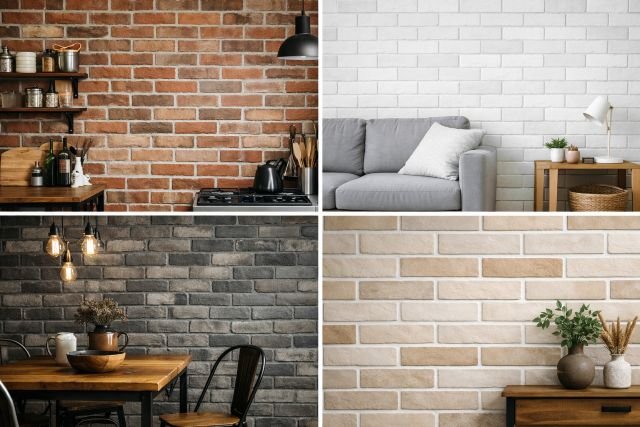

Brick effect tiles can give you the character of exposed brick with the practicality of tile. They work in kitchens, bathrooms, hallways, and even outdoor spaces, and they fit multiple styles—from modern minimal to industrial to rustic farmhouse. Still, choosing the right option can feel overwhelming because “brick look” is really a mix of decisions: color tone, tile size, finish, grout, and layout.
In this guide, you’ll learn how to choose brick effect tiles that look right in your space and perform well in real life. We’ll cover how color changes with lighting, which sizes create classic versus modern looks, how grout can make the same tile feel totally different, and what to check when using brick-look tiles on floors or wet areas.
What are brick effect tiles?
Brick effect tiles are ceramic, porcelain, or brick-slip tiles made to resemble traditional brickwork. The best ones mimic three details that make real brick appealing: gentle shade variation, surface texture, and the staggered rhythm of mortar joints.
You’ll typically encounter porcelain and ceramic brick-look tiles, along with thin brick slips. If you want maximum durability and lower water absorption, porcelain is often the safest choice, especially in bathrooms, showers, and busy kitchens. Industry standards commonly define porcelain tile as ceramic tile with water absorption of 0.5% or less when tested by ASTM methods, which helps explain its reputation for toughness and suitability in moisture-prone areas.
Brick effect tiles size: why dimensions matter more than you think
The size of brick effect tiles controls the overall “rhythm” of your wall or floor. Smaller tiles create more grout lines, which can look detailed and traditional. Larger or longer formats reduce grout breaks and can feel calmer and more contemporary.
Small formats for classic character
If you picture a timeless brick pattern, you’re probably imagining smaller rectangles. They naturally produce that familiar brick cadence and work beautifully in compact spaces where detail helps the room feel designed rather than empty.
A widely recognized classic is the 3×6 “subway” proportion, which became iconic because it was used in early 1900s subway architecture to create bright, hygienic, easy-to-clean surfaces.
Small brick-look sizes are especially effective for kitchen backsplashes, fireplace surrounds, and feature walls where you want texture and depth without overwhelming the space.
Elongated brick-look sizes for a modern feel
Longer brick effect tiles shift the look from “heritage brickwork” to “architectural modern.” Because you get fewer grout interruptions, the surface reads more streamlined. This can be a big win in open-plan rooms, larger bathrooms, and modern kitchens where you want the wall to feel intentional but not busy.
Elongated sizes also look great in contemporary layouts like vertical running bond or stack bond, where the format itself becomes the design statement.
Bigger format brick visuals for low-grout, easy cleaning
Some ranges offer larger-format tiles with brick graphics or oversized “brick modules.” These can be visually striking and easier to maintain because there’s less grout, but they tend to read less like authentic brick up close. If your priority is easy wipe-down and a cleaner visual field, these can be a smart compromise.
Choosing brick effect tiles color: the most common mistakes to avoid
Most regret around tile color comes from one thing: choosing under the wrong lighting. Your tile will look different in a bright showroom than it will under warm kitchen LEDs, a shaded bathroom window, or evening ambient light.
A helpful approach is to decide your “temperature lane” first. Do you want warm (creamy, sandy, terracotta) or cool (crisp white, blue-gray, charcoal)? Then choose a shade that complements your fixed finishes such as countertops, flooring, cabinets, and hardware.
White and off-white brick effect tiles
White brick effect tiles are popular because they brighten rooms and make spaces feel bigger. They can feel fresh and clean, especially in smaller kitchens and bathrooms. The risk is that a very bright white can look stark if your room lighting is cool and your surrounding finishes are also cool-toned.
If your cabinets are bright white, off-white brick effect tiles often look more expensive because they create soft contrast rather than a sharp edge. If your room is darker, a lightly glossy finish can help reflect light and lift the space.
Beige, greige, sand, and warm neutrals
Warm neutrals are the quiet workhorses of interior design. They’re forgiving, they pair well with wood, stone, and most paint colors, and they usually age better than extreme whites or deep darks. If you want something that still feels current but won’t look dated quickly, warm neutral brick effect tiles are one of the safest choices.
Terracotta and red brick-look tiles
Terracotta and red brick effect tiles bring instant warmth and character. They suit rustic kitchens, fireplaces, entryways, cafés, and feature walls where you want the space to feel grounded and inviting.
For cooking areas, it’s worth thinking about maintenance. Heavy texture plus a stove zone can mean grease mist clings more easily. If you love the look, you can still make it practical by choosing a smoother finish near the hob and using textured tiles on a separate feature wall.
Charcoal, black, and industrial tones
Dark brick effect tiles look bold and premium, especially in matte finishes. They also show dust and soap residue more readily than mid-tones, which matters in bathrooms and near sinks. Dark brick-look tiles work best when the room has strong lighting and you’re pairing them with warmer materials like oak, brass, or warm stone to prevent the space from feeling cold.
Multi-tone blends for a realistic brick effect
If your goal is “looks like real brick,” multi-tone blends usually win. Real brickwork has natural variation, and that variation also helps hide daily smudges and minor grout discoloration. If you have kids, pets, or a high-traffic kitchen, a blended tone can look better for longer with less effort.
Finish and texture: matte vs glossy vs textured brick effect tiles
Finish affects both the style and the cleaning experience. It also affects how strongly the tile shows fingerprints, water marks, and grout haze after installation.
Matte brick effect tiles tend to look more natural and hide fingerprints better. They’re often the easiest path to an authentic brick feel.
Glossy brick-look tiles bounce light, which can be brilliant in small or dark rooms. They also wipe clean easily, making them a practical choice for backsplashes. The tradeoff is that gloss can reveal installation issues more readily, especially if lighting hits at an angle.
Textured and 3D brick effect tiles add depth and realism. They’re fantastic for feature walls, fireplaces, and areas where you want drama. In zones exposed to cooking residue or frequent splashes, a heavily textured surface can require a bit more maintenance.
Brick effect tiles for floors and wet areas: what you must check
If you’re installing brick effect tiles on floors, especially in bathrooms or entryways, slip resistance is a practical detail you shouldn’t ignore.
Many specs and guidance documents reference that tile suitable for level interior areas expected to be walked on when wet commonly targets a wet DCOF of 0.42 or greater under relevant ANSI testing approaches.
In real terms, you should treat wall tiles and floor tiles as different categories. A brick effect tile that looks perfect on a shower wall might not be appropriate for a wet bathroom floor. Always check the manufacturer’s technical sheet or ask the retailer to confirm the rating for your intended use.
Grout: the design lever that changes everything
Two homes can use the same brick effect tiles and end up with completely different looks, simply because of grout choice.
If you want a modern, calm finish, choose a grout color close to your tile tone. It reduces visual breaks and makes the surface feel more seamless.
If you want a stronger brick-wall identity, choose contrasting grout. This highlights each “brick,” making the pattern more graphic. It can look stunning, but it also puts more pressure on precise installation because any unevenness becomes more noticeable.
Grout joint width matters too. Some brick-look tiles have handmade edges and are designed to look best with slightly wider joints. More rectified edges can suit tighter joints. The right choice is usually the one that matches the tile’s intended style rather than forcing a super-thin joint onto a rustic, uneven edge.
Layout patterns that suit brick effect tiles
The layout you choose affects whether the wall feels traditional, modern, or decorative.
Running bond gives the classic brick look and is forgiving in real rooms. Stack bond feels modern and architectural, and it pairs well with elongated tiles. Herringbone tends to look premium and works best when the tile shape is long enough to show the pattern clearly. Vertical running bond can help make ceilings feel taller, which is useful in smaller bathrooms.
Real-life scenarios: choosing the right color and size quickly
In a small kitchen with limited daylight, lighter brick effect tiles usually look better. Off-white or warm beige tones can brighten the room without feeling harsh. A classic or slightly elongated size works well, and a grout color that’s not pure white often stays looking cleaner over time.
In a modern bathroom vanity feature wall, elongated matte brick-look tiles in a calm neutral can look expensive and deliberate. If you keep grout close to the tile tone, the wall reads as texture rather than a busy pattern.
In a family home mudroom or utility space, performance matters most. A porcelain brick effect tile with verified suitability for wet foot traffic, in a mid-tone blended color, can be both practical and good-looking because it hides everyday dirt and scuffs better.
Brick effect tiles: quick definition for featured snippets
Brick effect tiles are ceramic, porcelain, or brick-slip tiles designed to mimic the appearance of real brickwork, combining a brick-like rectangular shape, shade variation, and surface texture with the easy-clean durability of tile.
FAQ: brick effect tiles
Are brick effect tiles timeless?
They’re generally considered timeless because brick is an architectural material with a long design history. The styling changes over time, but brick textures and brick-like patterns repeatedly return because they pair well with both modern and traditional interiors.
What size brick effect tiles look most realistic?
Smaller, classic proportions usually read closest to traditional brickwork because they create a familiar rhythm of joints. The iconic 3×6 subway proportion is especially associated with classic rectangular wall tiling.
Are brick effect tiles good for showers?
Yes, particularly porcelain. Porcelain’s low water absorption definition is one reason it’s widely used in moisture-prone areas.
What grout color should I choose with brick effect tiles?
Match grout to tile for a calmer, modern look. Choose contrast grout for a more defined, traditional brick-wall effect. The best choice depends on whether you want the pattern to stand out or the surface to feel more seamless.
What should I look for when choosing brick effect tiles for a bathroom floor?
Check slip-resistance information intended for wet use. Many references cite wet DCOF guidance around 0.42 for level interior spaces expected to be walked on when wet, but always verify the product’s intended application in its technical documents. If you’re unsure, ask the supplier for the exact rating and recommended use cases.
Conclusion: choosing brick effect tiles that look right and live well
Brick effect tiles are at their best when you choose them like a designer and a realist at the same time. Start with size because size sets the visual rhythm: smaller formats feel classic and detailed, elongated formats feel modern and calm. Then choose color based on your actual lighting and fixed finishes, not on a showroom snapshot. Finally, lock in the practical details — finish for cleanability, grout for the style direction you want, and performance checks if the tiles will be underfoot or exposed to water. If you do those steps in order, your brick effect tiles won’t just look great on install day — they’ll still feel like the right choice years later.













Leave a comment