

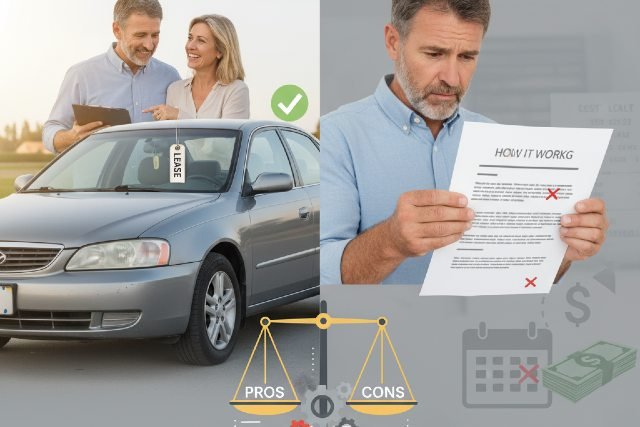

Can you lease a used car? The short answer is yes, you can lease a used car — though it’s less common than leasing a new vehicle and comes with its own set of trade-offs.
In this article we’ll walk through how a used car lease works, the pros and cons, questions to ask, and when it makes sense (or doesn’t). If you’re evaluating lease vs. buy for a pre-owned vehicle, this guide will help you navigate that decision.
What Does It Mean to Lease a Used Car?
Leasing typically means you agree to use a vehicle for a fixed period (say 2-3 years) and pay monthly rental payments rather than purchasing it outright. At the end of the term you return the car (or sometimes have the option to buy it).
With a used car lease, you’re doing the same concept but the vehicle is already pre‐owned (or sometimes a certified pre‐owned).
How it works — key steps:
- The lessor (dealer or leasing company) owns the vehicle and you (the lessee) pay to use it for an agreed term.
- Monthly payment is driven by depreciation (difference between current value and expected residual value at end) + fees + interest/money factor.
- Terms include mileage limits, condition requirements, lease-end obligations.
- Since the vehicle is used, warranty coverage, depreciation curve and maintenance risk may differ compared to a new car lease.
Why Consider Leasing a Used Car?
Here are some of the advantages that the used-car lease model brings:
- Lower monthly payments: Because the car has already undergone some depreciation, the lease payments can be lower than for a comparable new car.
- Access to higher tier model: With lower payments you may afford a nicer or more premium used car than you might buying or leasing new.
- Less depreciation-risk: Some of the steepest depreciation occurs early in a new car’s life; by leasing a used model you avoid part of that drop.
- Shorter commitment (possibly): Some used‐car leases might have shorter lease terms or creative options (depending on the dealer) which might appeal if you prefer flexibility.
The Drawbacks & Risks
Leasing a used car isn’t without pitfalls. Here are the main ones:
- Less availability / fewer options: Many dealers and leasing companies don’t offer used-car leases, so your selection may be limited.
- Warranty & maintenance risks: A used car may be out of the original manufacturer warranty, or near the end of it. Repair or maintenance costs may be higher.
- Higher interest/money factor: Because the vehicle is used, the lease may carry a higher rate (money factor) than a new-car lease.
- Residual value estimation risk: For used cars it may be harder to predict what the value will be at the end of the lease, which can affect payment structure.
- Mileage, wear-and-tear charges still apply: Regardless of new/used, if you exceed mileage or damage the car, you’ll face charges.
- No equity/build-value: Lease means you are not building ownership; you return the car at term unless you negotiate a buy-out.
- May cost more over long run: If you keep renewing or rolling into another lease, you might pay more overall than if you’d purchased a reliable used car.
Does It Make Sense for You?
Here are some scenario-based examples to help decide if leasing a used car makes sense.
| Scenario | Might Make Sense | Might Not Make Sense |
|---|---|---|
| You drive limited miles, like < 10,000/year, and want low monthly payment | Yes: used-car lease could be affordable and sufficient | — |
| You want to drive a premium model but can’t afford buying new | Yes: lower payments on used premium lease | — |
| You drive very high miles or commute long distances | — Probably not: mileage penalties may bite | Not good |
| You want to keep the car 5+ years and build value | — Probably not: lease returns car or you buy at end, no ownership growth | Better to buy used |
| You want minimal maintenance risk and full warranty coverage | — Might be risky if used car warranty lapsing | Better to buy newer or certified pre-owned |
How to Lease a Used Car: Step-by-Step
Here are actionable steps to leasing a used car smartly:
- Check availability
Call local dealerships or leasing companies and ask: “Do you offer leases on pre-owned/used vehicles?” Many may not. - Vehicle selection
Prefer vehicles that are recent (few years old), low mileage, certified pre-owned if possible — reducing risk of major repair. - Understand the lease terms
- Capitalized cost (what value the lessor uses)
- Residual value (what it’s expected to be worth at term end)
- Money factor / interest equivalent
- Mileage cap & excess miles per year
- Wear & tear rules and disposition fees
– Ensure the contract handles used-car condition expectations.
- Compare lease vs buy
Run numbers: monthly payment + maintenance + insurance + anticipated end-cost vs buying used and holding it. - Check warranty and maintenance coverage
If the warranty is nearly expired, factor possible extra repair cost into total cost. Ask: will I be responsible for major repairs? - Inspect the vehicle
Even though you’re leasing, you still need assurance quality is good. Get a mechanic check, vehicle history report. - Negotiate terms
You may be able to negotiate better money factor, higher residual value, lower upfront fees. - Be aware of end-of-lease options
What happens at end: return the car, buy it for preset amount, or extend? Make sure you understand your options.
FAQ: Common Questions About Used Car Leases
Q: Can anyone lease a used car?
Yes—but availability depends on the dealer/lessor, credit requirements, vehicle age/mileage, warranty status.
Q: Are lease payments always lower for used cars?
Not always, but often lower than comparable new car leases because less depreciation remains.
Q: Will I have to pay extra for repairs?
Possibly. If the car is used and out of warranty or has wear & tear, you may bear more maintenance responsibility.
Q: What about insurance?
You’ll still need full car insurance per lease terms. Since the car is used, insurance may be slightly lower, but check local market.
Q: Can I buy the car at lease end?
Yes, depending on the contract. Sometimes you can buy the car for the residual value agreed at lease start.
Q: Is it better to buy a used car instead of leasing?
In many cases yes — especially if you plan to keep the car long term, drive many miles, or want ownership. Some sources say buying a used car often makes more financial sense.
Pros & Cons Summary
Pros
- Lower monthly payments
- Potential access to nicer car for budget
- Reduced new-car depreciation risk
Cons
- Fewer leasing options available
- Higher interest/money factor
- Warranty/maintenance risk may be higher
- Mileage/wear charges still apply
- You don’t build equity or ownership
Key Metrics & Tips for Pakistan / Global Context
While most of the data above is U.S.-centric, if you’re in Pakistan (or other markets), apply the same key metrics:
- Check resale value and expected depreciation of the vehicle locally.
- Verify warranty/servicing availability for the used car.
- Be mindful of mileage, condition, and market supply for used-car leasing.
- Negotiate the same terms: residual value, monthly payment, fees.
- Assess maintenance cost, especially for older cars in markets where service/parts may be costlier.
- Consider currency, import duties, regional lease availability (used‐car lease offerings may be less common in some markets).
Final Thoughts & Recommendation
So you may ask: should you lease a used car? The answer: it depends. If your priority is a lower monthly payment, you drive limited miles, you’re comfortable with lease restrictions and warranty risk — then yes, leasing a used car can be a good choice.
But if you drive a lot, want long-term ownership, want minimal risk of repairs, or want maximum flexibility — you may be better off buying a used car instead of leasing.
Make sure you run the numbers: compare what the monthly payment would be, estimate total cost over your expected usage period, include maintenance, insurance, lease end charges. Use the decision table above and ask yourself what matters most to you: cost control now, flexibility, ownership, or driving more miles.
Conclusion
Can you lease a used car? Yes — and it can offer compelling advantages such as lower monthly payments and a smarter way to get into a nicer car for less. But it also brings risks around warranty, maintenance, availability, and lease restrictions.
If you’re considering leasing a used car, arm yourself with facts: inspect the vehicle, understand terms, compare lease vs buy, and pick the scenario that best fits your driving habits and budget.













Leave a comment