

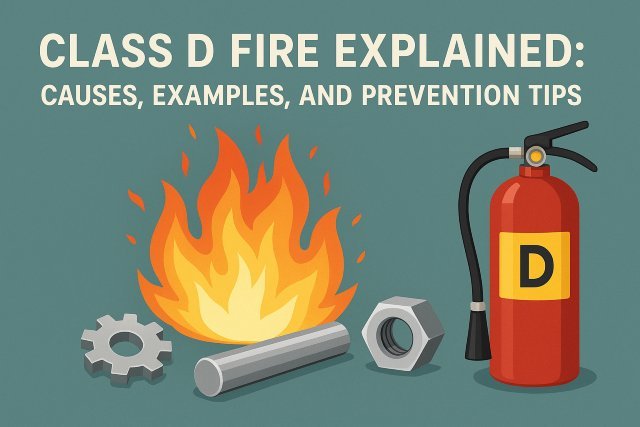

What Is a Class D Fire?
A Class D fire is a type of fire that involves combustible metals such as magnesium, titanium, sodium, lithium, and potassium. These fires are especially dangerous because they burn at extremely high temperatures and can react violently with water or other extinguishing agents.
When metals ignite, they can produce intense flames and sparks, releasing toxic gases and causing severe burns or explosions if not handled properly. Because of this, Class D fires require specialized extinguishers and strict safety procedures to control.
Understanding the Causes of Class D Fires
The most common causes of Class D fires include:
- Machining or grinding of metals like titanium or magnesium that create fine metal dust.
- Storage of reactive metals in damp or oxygen-rich environments.
- Overheating of metal components in manufacturing or lab settings.
- Accidental exposure of metal shavings or powders to open flames or sparks.
These conditions are common in industries like aerospace, automotive manufacturing, laboratories, and metal fabrication.
Important: Even small amounts of metal dust can ignite explosively when exposed to air or moisture. Always follow strict housekeeping and ventilation protocols.
Examples of Class D Fires
1. Magnesium Fire in Automotive Workshop
Magnesium components in cars can catch fire when overheated during repairs or accidents. These fires cannot be extinguished with water and often require a dry powder Class D fire extinguisher.
2. Titanium Dust Explosion
In aerospace manufacturing, titanium dust can ignite under friction or static discharge. These incidents can lead to rapid, violent explosions if not properly contained.
3. Laboratory Sodium Fire
When sodium metal comes into contact with water, it reacts to produce hydrogen gas, which ignites immediately. This is a classic example of a Class D fire scenario in chemical labs.
How to Extinguish a Class D Fire
Fighting a Class D fire requires specialized extinguishing agents and trained personnel. Using the wrong method — such as spraying water — can make the situation worse.
| Extinguishing Agent | Use Case | How It Works |
|---|---|---|
| Dry Powder (Class D extinguisher) | Magnesium, sodium, titanium fires | Smothers the fire and isolates the metal from oxygen. |
| Graphite Powder | Sodium or potassium fires | Forms a crust over the burning metal. |
| Sodium Chloride (NaCl) | Common industrial metal fires | Absorbs heat and prevents re-ignition. |
Never use:
- Water
- Foam extinguishers
- CO₂ extinguishers
These can cause violent reactions or explosions with burning metals.
Prevention Tips for Class D Fires
Preventing a Class D fire starts with proactive safety practices and environmental controls. Here’s how to reduce the risk:
1. Control Metal Dust
- Use proper ventilation systems and dust collection units.
- Clean machinery and work surfaces frequently.
- Avoid sweeping — use vacuum systems designed for metal dust.
2. Safe Storage
- Store reactive metals in airtight, dry containers.
- Keep them away from heat sources, flames, and oxidizing agents.
- Label all containers clearly to avoid mix-ups.
3. Use Appropriate Extinguishers
- Place Class D fire extinguishers near metalworking areas.
- Train employees on their correct use and maintenance.
- Conduct regular fire drills specific to metal fires.
4. Employee Training
- Educate workers about metal fire hazards and emergency protocols.
- Emphasize PPE usage, including flame-resistant gloves and face shields.
Class D Fire Extinguishers: What You Need to Know
A Class D fire extinguisher is specially designed to handle burning metals. These extinguishers are typically filled with dry powder agents that smother the fire instead of cooling it.
Key points about Class D extinguishers:
- Color-coded yellow in many regions.
- Should be located in metalworking and chemical handling areas.
- Must be inspected and maintained at least once per year.
Common Mistakes When Handling Class D Fires
Even trained professionals can make dangerous errors when responding to a Class D fire. Avoid these common mistakes:
- Using water or CO₂ – both can cause explosions or metal splattering.
- Covering with sand – ineffective and can worsen the fire.
- Delaying evacuation – always evacuate the area immediately and call emergency services.
- Failing to isolate energy sources – turn off all electrical or mechanical equipment nearby.
FAQ: Class D Fire Safety
Q1. What materials cause a Class D fire?
Metals such as magnesium, titanium, potassium, sodium, and lithium are the primary sources of Class D fires.
Q2. Can I use a regular fire extinguisher?
No. Only a Class D fire extinguisher with dry powder agents is safe and effective.
Q3. How can I identify a Class D fire extinguisher?
Look for a yellow label and a “Class D” marking on the body.
Q4. What is the temperature of a metal fire?
Metal fires can exceed 3,000°F (1,650°C), far hotter than typical Class A or B fires.
Conclusion: Stay Prepared for Class D Fire Hazards
Class D fires are among the most dangerous and difficult to control due to the reactivity of burning metals. Understanding their causes, examples, and prevention methods is vital for industrial safety.
Always keep Class D fire extinguishers nearby, enforce proper training, and maintain a clean, controlled work environment. When it comes to metal fires, prevention and preparation save lives.








Leave a comment