

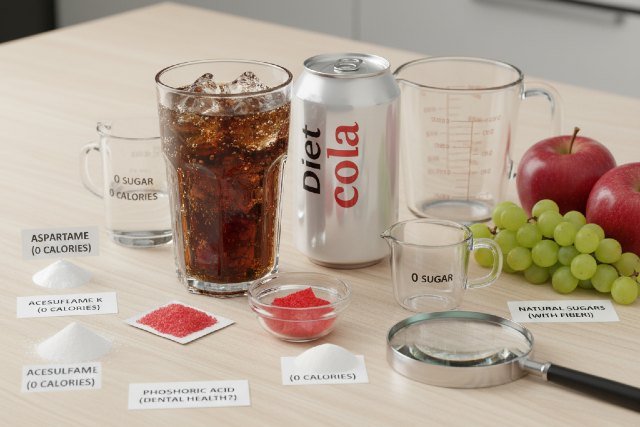

Is diet cola actually a healthier choice — or just clever marketing? With “zero sugar” and “zero calories” displayed boldly on the label, many people assume diet cola is a guilt-free alternative. But the real diet cola nutrition profile is more complex than it seems.
In this guide, we’ll break down what’s really inside diet cola, explore recent scientific findings, address the long-standing debate about artificial sweeteners, and help you decide whether diet soda belongs in your daily routine.
What Is Diet Cola? A Quick Overview
Diet cola is a low-calorie, artificially sweetened soft drink designed to mimic the taste of regular cola without the added sugar. Since launching in the mid-20th century, diet sodas have become a staple for people seeking weight control, blood-sugar management, or simply fewer calories.
Common Reasons People Choose Diet Cola
- To reduce sugar intake
- To lower daily calorie consumption
- To avoid blood-sugar spikes
- For weight loss
- For taste preference over regular cola
Diet Cola Nutrition Breakdown (Per 12-oz / 355 mL Serving)
| Nutrient | Amount |
|---|---|
| Calories | 0–5 kcal |
| Sugar | 0 g |
| Carbohydrates | 0 g |
| Fat | 0 g |
| Protein | 0 g |
| Sodium | 20–40 mg |
| Caffeine | 30–48 mg |
| Artificial Sweeteners | Varies (aspartame, sucralose, acesulfame K, etc.) |
While the label looks clean, the lack of calories doesn’t necessarily mean the product is “healthy.”
Key Ingredients in Diet Cola (and What They Actually Do)
1. Artificial Sweeteners
Most diet colas rely on sweetener blends such as:
- Aspartame
- Sucralose
- Acesulfame Potassium (Ace-K)
- Stevia (in some newer formulations)
These ingredients provide sweetness without calories. However, they’ve been the subject of debate around metabolic effects, cravings, gut health, and long-term safety.
Research Example:
A 2023 JAMA Network study found a correlation between high intake of non-nutritive sweeteners and increased cardiovascular risk, though not a direct cause-and-effect relationship.
2. Caramel Color
Adds the classic dark cola appearance. Some types have been linked to byproducts like 4-MEI, which raised safety concerns in past years. Regulations vary by country.
3. Phosphoric Acid
Gives diet cola its tangy flavor. Over time, excess phosphoric acid has been associated with lower bone density, especially in women.
4. Caffeine
Adds stimulation and enhances flavor. Excess intake may cause jitteriness, anxiety, and sleep issues.
## Is Diet Cola Actually Healthier Than Regular Cola?
Let’s compare:
Regular Cola (12 oz)
- ~140 calories
- ~39 g sugar
- High glycemic impact
Diet Cola (12 oz)
- ~0 calories
- ~0 g sugar
- No blood-sugar spike
Based on calories and sugar alone, diet cola nutrition wins.
However, “healthier” depends on what metric you prioritize.
Pros of Diet Cola
- No sugar = no blood-glucose spike
- Helpful for people with diabetes
- Supports calorie reduction
- Fewer dental issues than sugary soda
- Satisfies cravings without calories
Cons of Diet Cola
- May increase preference for sweet foods
- Possible gut microbiome disruption
- Some studies link heavy consumption to cardiovascular risk
- Still acidic → may erode enamel
- Possible impact on hunger hormones
How Artificial Sweeteners Affect the Body
Artificial sweeteners don’t just pass through your system unnoticed. Here’s what current science says:
1. They May Influence Appetite Signals
Some studies indicate that artificial sweeteners might confuse the body’s metabolic response, potentially increasing appetite or cravings.
2. Impact on Gut Bacteria
Sweeteners like sucralose and saccharin may alter gut microbiota in certain individuals.
3. Effect on Weight Management
Contrary to expectations, several meta-analyses show mixed results:
- Some people lose weight
- Others gain weight
- Many see no change
This suggests diet cola isn’t a magic bullet and should be part of a broader nutrition strategy.
Is Diet Cola Good for People with Diabetes?
Yes — with caution.
Benefits
- No sugar
- No carbohydrates
- No glucose impact
Potential Concerns
- Some studies suggest artificial sweeteners may affect insulin sensitivity over time
- May increase cravings for sweet foods, making diet management harder
Bottom Line: Occasional consumption is generally safe, but not a substitute for water or unsweetened beverages.
Does Diet Cola Help With Weight Loss?
Diet cola can assist indirectly by:
- Reducing caloric intake
- Helping soda drinkers transition to lower-calorie options
- Controlling sweet cravings temporarily
However, relying heavily on diet soda may:
- Increase cravings for sweets overall
- Trigger compensatory eating
- Impact appetite hormones
For long-term weight loss, diet cola is neutral at best — not a solution on its own.
Can You Drink Diet Cola Every Day?
Safe in Moderation? Likely.
Most health organizations — including the FDA and EFSA — consider approved artificial sweeteners safe within daily limits.
But daily consumption may raise risks such as:
- Tooth enamel erosion
- Potential gut microbiome changes
- Higher cholesterol or blood pressure in heavy consumers (as shown in some studies)
- Increased cravings for sweet foods
Recommendation: Limit to 1 can per day or less. Water, sparkling water, and unsweetened tea are healthier daily choices.
Diet Cola vs. Other Diet Soft Drinks
Diet Cola vs. Diet Lemon-Lime Soda
- Diet cola has phosphoric acid; lemon-lime often has citric acid
- Flavor preference usually determines choice
Diet Cola vs. Zero Sugar Cola (e.g., Coke Zero)
- Zero Sugar formulas aim to mimic regular cola more closely
- Different sweetener blends
- Nutrition values remain nearly identical
Diet Cola vs. Sparkling Water
- Sparkling water has no artificial sweeteners
- Better for hydration and long-term health
Is There a Healthier Diet Cola Option?
If you want lower risk alternatives:
1. Stevia-Sweetened Sodas
Example: Zevia Cola
- No artificial colors
- No caramel color
- Natural sweetener
2. Low-Caffeine Options
Helpful for those sensitive to stimulants.
3. Reduced Sodium Formulas
Some brands offer low-sodium diet colas.
Frequently Asked Questions (Featured Snippet Style)
Is diet cola bad for you?
In moderation, diet cola is generally safe. Excessive intake may impact gut health, appetite, and cardiovascular markers.
Is diet cola healthier than regular cola?
Yes, diet cola eliminates sugar and calories. However, it introduces artificial sweeteners, which carry their own controversies.
Does diet cola break a fast?
Most intermittent fasting protocols allow diet soda, but some experts argue artificial sweeteners may affect insulin response.
Does diet cola cause weight gain?
Not directly. But its potential to increase cravings may lead to indirect weight gain in some individuals.
Conclusion
So — is diet cola a healthier choice?
Yes and no.
The diet cola nutrition label shows clear advantages: zero sugar, nearly zero calories, and reduced impact on blood glucose. These factors make it appealing for those managing weight or diabetes.
However, artificial sweeteners, acidity, and potential metabolic effects mean diet cola isn’t a “health drink.” It’s a better choice than sugary soda — but not the best choice overall.
If you enjoy diet cola, consume it moderately and prioritize water and whole foods for long-term health.















Leave a comment