

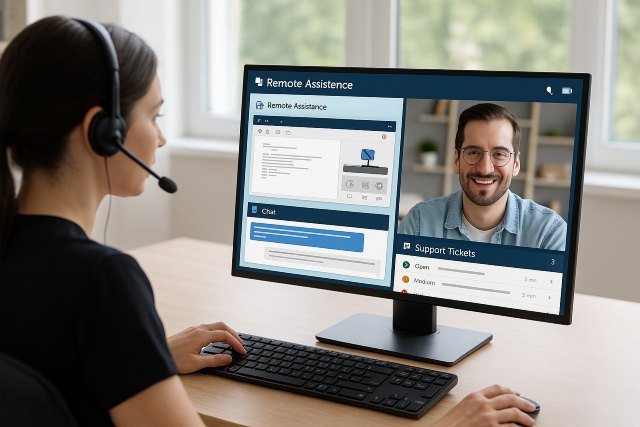

A remote servicing suite is quickly becoming the backbone of modern customer support. Within the first interaction, businesses can troubleshoot issues, guide users, and deploy fixes without an on-site technician. This shift isn’t just convenient — it transforms support operations entirely by reducing costs, boosting efficiency, and improving customer satisfaction. In this article, we’ll explore how a remote servicing suite reshapes support workflows, enhances user experience, and serves as a competitive advantage in today’s digital-first world.
What Is a Remote Servicing Suite?
A remote servicing suite is an integrated platform that allows support teams to diagnose, monitor, and resolve customer issues from any location. These suites often include:
- Remote device access
- Real-time monitoring
- Guided workflows
- Knowledge-based automation
- AI-driven diagnostics
- Customer communication tools
Key Capabilities Typically Include:
| Feature | Description | Benefit |
|---|---|---|
| Remote Access | Control customer devices remotely | Faster troubleshooting |
| Predictive Analytics | Detect issues before they occur | Reduce downtime |
| Knowledge Automation | Pre-built docs and scripts | Standardize resolutions |
| Secure Session Management | Authentication, encryption | Protect customer data |
This combination streamlines support and reduces the need for in-person service.
Why Remote Support Is Now Essential
Businesses across industries — from SaaS to manufacturing to telecom — are adopting remote servicing due to several trends:
- Rising customer expectations for instant support
- Global, distributed workforces
- Pressure to reduce field-service costs
- Growing complexity of digital products
- Need for always-on service availability
According to Gartner, companies that implement digital field service tools improve first-time fix rates by up to 30%, while Forrester reports that remote support solutions can cut operating costs by 20–40%.
How a Remote Servicing Suite Transforms Customer Support
1. Reduces Resolution Time Dramatically
Traditional support often involves long email chains, back-and-forth instructions, or waiting for a technician. A remote servicing suite eliminates these delays.
How It Speeds Up Support:
- Support teams can remotely access devices instantly.
- Automated diagnostics detect root causes within seconds.
- AI recommendations suggest next best actions.
- Customers no longer need to explain complex technical symptoms.
Example:
A hardware company reduced average handling time from 45 minutes to 10 minutes after implementing remote access and guided troubleshooting.
2. Improves First-Contact Resolution Rates
With deeper visibility and remote control, support agents solve more problems during the first interaction.
Enhancements that Boost FCR:
- Real-time data on device status
- Built-in scripts for common problems
- Context-aware analytics
- Access to historical support logs
This leads directly to increased customer satisfaction and fewer follow-up tickets.
3. Cuts Support Costs Significantly
A major advantage of remote servicing is its ability to reduce operational expenses.
Cost-Reduction Areas:
- Fewer onsite technician dispatches
- Reduced manual labor
- Lowered infrastructure and transportation expenses
- Automated workflows that reduce agent workload
Companies with remote servicing tools typically report 25–60% savings on support costs.
4. Enhances Customer Experience
A remote servicing suite allows customers to get help faster, with minimal disruptions.
Customer Experience Benefits:
- No waiting for a physical visit
- Transparent progress tracking
- Personalized troubleshooting
- Faster resolutions
- 24/7 global coverage
This translates into higher Net Promoter Scores (NPS) and long-term customer loyalty.
5. Enables Predictive and Proactive Support
By monitoring device health and usage patterns, a remote servicing suite can alert teams about potential issues before users face them.
Proactive Capabilities:
- Predictive maintenance alerts
- Automated issue detection
- Scheduled performance checks
- Behavior-based warnings
This shift from reactive to proactive support drastically reduces downtime and improves reliability.
6. Increases Support Team Productivity
Support teams become significantly more efficient with centralized tools.
Productivity Features:
- Automated workflows
- Templates for common fixes
- Multi-session handling
- In-depth analytics on agent performance
- Collaboration tools for complex cases
When agents spend less time on manual tasks, they can focus on high-value interactions.
7. Strengthens Security and Compliance
Modern remote servicing platforms prioritize security to protect user data.
Security Features Include:
- End-to-end encryption
- Multi-factor authentication
- Role-based access controls
- Session recording for compliance
- Privileged access management
Industries like healthcare, finance, and telecom rely on these controls to ensure compliance with GDPR, HIPAA, PCI-DSS, and other regulations.
Use Cases Across Industries
SaaS & Software Vendors
- Onboard new users faster
- Patch or update software remotely
- Diagnose configuration issues
Manufacturing & IoT
- Monitor connected machinery
- Detect anomalies before failures
- Reduce field-service dispatches
Telecom & Networking
- Configure routers and devices remotely
- Optimize network performance
- Handle high-ticket volumes at scale
Healthcare Tech
- Maintain medical equipment uptime
- Securely support connected devices
- Reduce disruptions to patient care
Common Questions About Remote Servicing Suites (FAQ)
What is a remote servicing suite?
A remote servicing suite is a platform that enables support teams to diagnose, troubleshoot, and resolve issues on customer devices without a physical visit.
Is a remote servicing suite secure?
Yes. Most solutions include encryption, authentication protocols, role-based permissions, and session monitoring to ensure data protection.
How does it reduce support costs?
By eliminating travel, increasing agent productivity, and automating manual tasks, companies significantly reduce operational overhead.
Can small businesses benefit from it?
Absolutely. Startups and SMBs gain immediate cost savings and improved customer satisfaction with minimal infrastructure.
Does it require advanced technical knowledge?
Not necessarily. Many platforms offer intuitive dashboards, guided workflows, and automated diagnostics designed for non-technical support agents.
Actionable Tips for Implementing a Remote Servicing Suite
- Train support teams on remote access best practices.
- Start with high-frequency issues to automate quick wins.
- Integrate the suite with your CRM to centralize data.
- Establish security protocols for privileged access.
- Use analytics dashboards to track performance improvements.
- Collect customer feedback and optimize workflows continuously.
Conclusion
A remote servicing suite is more than a support tool — it’s a strategic investment that enhances customer experience, reduces operating costs, and future-proofs service delivery. Businesses across all industries are using remote servicing to streamline workflows, eliminate downtime, and deliver faster, more personalized support. As customer expectations continue to rise, adopting a remote servicing suite ensures you stay ahead of the competition while providing exceptional service at scale.













Leave a comment