

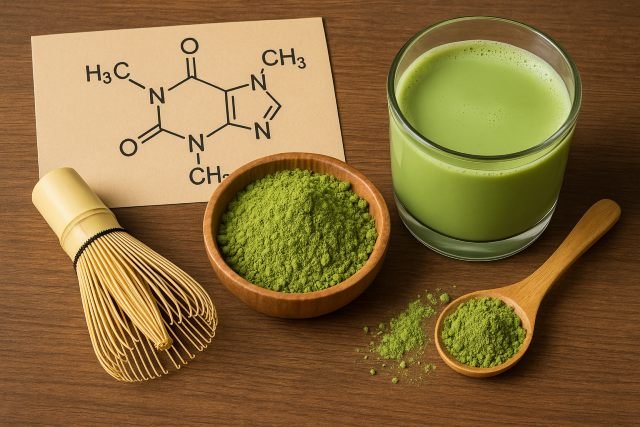

Matcha has exploded in popularity as a clean-energy alternative to coffee — but how much caffeine is in matcha, and is it actually healthier? Whether you drink matcha for focus, metabolism, or simply the taste, understanding its caffeine levels can help you use it safely and effectively.
This guide breaks down how much caffeine in matcha contains, how it compares to coffee, its benefits, side effects, safe daily intake, and the best ways to enjoy it without jitters.
What Is Matcha? (Quick Definition for Featured Snippet)
Matcha is a powdered green tea made from shade-grown tea leaves, containing higher caffeine and antioxidants than regular green tea.
Because you consume the whole leaf (not just steeped water), matcha delivers more nutrients — and more caffeine — per serving.
How Much Caffeine Is in Matcha?
A typical 1-gram serving of matcha contains 19–35 mg of caffeine.
A standard 2-gram matcha serving (1 teaspoon) contains 38–70 mg of caffeine.
Quick Answer:
A standard cup of matcha has 38–70 mg of caffeine, depending on quality and preparation.
Why the Range?
Matcha caffeine varies based on:
- Where it’s grown
- Whether it’s ceremonial or culinary grade
- Amount of powder used
- Water temperature
Matcha vs. Coffee: Caffeine Comparison Chart
| Beverage | Serving Size | Caffeine |
|---|---|---|
| Matcha tea | 1 tsp (2 g) | 38–70 mg |
| Matcha latte | 2–3 g | 60–90 mg |
| Regular brewed coffee | 8 oz | 95–120 mg |
| Espresso | 1 shot | 63 mg |
| Green tea (brewed) | 8 oz | 28–45 mg |
Key Takeaway
Matcha contains less caffeine than coffee, but due to the presence of L-theanine, its energy release is smoother and longer-lasting.
Why Matcha Feels Different: The L-Theanine Effect
Matcha naturally contains L-theanine, an amino acid that:
- Slows caffeine absorption
- Reduces anxiety
- Increases alpha brain waves (calm focus)
- Prevents caffeine crashes
This is why many people report:
- Clear concentration
- Stable energy
- Zero jitters
Compared to coffee’s sharp spike, matcha offers “calm energy” for 4–6 hours.
Factors That Affect How Much Caffeine Is in Matcha
1. Ceremonial vs. Culinary Grade
- Ceremonial matcha: Younger leaves → higher caffeine
- Culinary matcha: Older leaves → less caffeine
2. Serving Size
More powder = more caffeine.
3. Water Temperature
Hotter water releases caffeine faster, but does not create more of it.
4. Quality & Origin
Japanese Uji and Nishio matcha tend to contain higher caffeine due to shading techniques.
Health Benefits of Matcha
Matcha is packed with nutrients, including:
- Polyphenols
- Catechins (especially EGCG)
- L-theanine
- Chlorophyll
- Fiber
- Antioxidants (up to 137x more than green tea)
1. Enhanced Focus & Cognitive Function
Research shows that caffeine + L-theanine improves attention and working memory more than caffeine alone.
2. Boosts Metabolism
EGCG in matcha may:
- Increase fat oxidation
- Support metabolic rate
3. High in Antioxidants
Matcha contains one of the highest antioxidant scores among superfoods.
4. Supports Heart Health
Green tea studies show links to:
- Reduced LDL cholesterol
- Better vascular function
5. Stress Reduction
L-theanine promotes relaxation without drowsiness.
Risks & Side Effects of Matcha Caffeine
While matcha is generally safe, high intake can trigger:
1. Insomnia or Restlessness
Especially if consumed after 2 PM.
2. Digestive Issues
Very high doses may cause nausea due to concentrated catechins.
3. Headaches or Anxiety
Rare but possible if you’re caffeine-sensitive.
4. Iron Absorption Interference
Green tea polyphenols may reduce iron absorption from meals.
How Much Matcha Is Safe Per Day?
General Safe Limit: 1–2 teaspoons per day
This equals 60–140 mg of caffeine, which is within the recommended safe caffeine limit of 400 mg/day for healthy adults (FDA guidance).
Pregnancy Guidelines
Pregnant individuals should limit caffeine to ≤200 mg/day.
1 serving of matcha → safe
2–3 servings → may approach limit
How to Reduce Caffeine in Matcha
If you are sensitive to caffeine, try:
- Using ½ tsp instead of 1 tsp
- Choosing culinary grade matcha
- Making an iced matcha (cold reduces extraction rate)
- Pairing with milk or a meal
Best Time to Drink Matcha
- Morning: Best energy boost
- Before work/study: Improves focus
- Pre-workout: Enhances fat oxidation & endurance
- Avoid after 3 PM if caffeine-sensitive
How to Make Low- or High-Caffeine Matcha
For Lower Caffeine
- Use ½ tsp powder
- Choose culinary grade
- Make iced matcha
For Higher Caffeine
- Use ceremonial grade
- Increase powder to 1.5–2 tsp
- Use hot (not boiling) water: 170–180°F
FAQs (Featured Snippet Optimized)
1. Does matcha have more caffeine than coffee?
No. Matcha has 38–70 mg per serving, while coffee averages 95–120 mg.
2. How much caffeine is in a matcha latte?
Most café matcha lattes contain 60–90 mg of caffeine due to larger serving sizes.
3. Is matcha safe every day?
Yes — 1–2 servings daily is safe for most people.
4. Does matcha cause jitters?
Rarely. L-theanine helps prevent caffeine spikes.
5. How much caffeine in matcha vs. green tea?
Matcha: 38–70 mg
Brewed green tea: 28–45 mg
Conclusion: How Much Caffeine Is in Matcha?
Understanding how much caffeine in matcha helps you enjoy its clean, calm energy without side effects. With about 38–70 mg per serving, matcha offers a balanced boost thanks to L-theanine, making it ideal for focus, productivity, and long-lasting energy.
Whether you’re replacing coffee or just adding a healthy ritual to your day, matcha remains one of the most beneficial caffeinated beverages — when consumed in moderation.









Leave a comment