



Supply chains don’t break because companies lack data. They break because data is trapped inside separate systems — yards, terminals, carriers, rail networks, maintenance teams, and warehouses — each running its own playbook. Kaleris exists to close those gaps by connecting execution across key nodes and modes, turning operational events into shared, real-time visibility and smarter decisions.
You’ll learn what “connecting the supply chain ecosystem” really means, how Kaleris approaches it, and what practical outcomes shippers, terminals, and logistics teams can expect — backed by real case results and authoritative industry data.
What “connecting the supply chain ecosystem” actually means
Most supply chain teams already have a stack: WMS for warehouses, TMS for transportation planning, ERP for finance and orders, plus countless tools for appointments, docks, carriers, and spreadsheets for exceptions.
The problem is that the highest-friction execution points — where delays, dwell, accessorials, and service failures stack up — often sit in the “in-between” spaces:
- the yard between the warehouse and the road
- the terminal between ship and rail/truck
- the handoff between carrier milestones and shipper reality
- the maintenance and repair workflows that affect asset availability
Kaleris positions its platform to unify these execution points by consolidating operational data from areas like yard management, transportation workflows, maintenance/repair, terminal operations, and vessel/ocean-related solutions — so you don’t have “dark spots” where problems hide until it’s too late.
In plain terms: connecting the ecosystem means connecting the events — gate in/out, trailer moves, rail arrivals, vessel schedules, yard inventory, terminal operations — into one shared execution picture.
Kaleris and the connected execution layer
A useful way to think about Kaleris is: not “another planning system,” but an execution and visibility layer that bridges critical operational nodes.
Kaleris describes its approach as consolidating supply chain execution software across nodes and modes, using operational data to eliminate gaps at pivotal execution points.
This matters because modern supply chains are under constant pressure to be faster and more transparent — yet end-to-end visibility is still rare. A Financial Times report (citing McKinsey) noted that while many companies report visibility into direct suppliers, far fewer can see deeper tiers — showing how collaboration and shared data remain a major bottleneck.
Kaleris’ “connective tissue” strategy centers on a few recurring themes:
- Real-time operational truth (what’s happening now, not what was planned)
- Cross-network visibility (shared KPIs, shared events, fewer blind handoffs)
- Automation at choke points (gates, appointments, moves, asset tracking)
- Integration (so YMS/TMS/WMS/terminal systems don’t become silos)
Kaleris Execution & Visibility Platform and supply chain visibility
When people search for “Kaleris,” they’re often looking for how it improves supply chain visibility without forcing a rip-and-replace of everything else.
Kaleris’ Execution & Visibility Platform is positioned as a way to consolidate execution data across modes and nodes (yard, transportation, terminal, ocean/vessel) to remove gaps and enable better decisions.
Why real-time visibility is a performance issue, not just a reporting issue
Visibility isn’t just “nice dashboards.” It directly influences:
- detention/demurrage exposure
- service levels (OTIF, appointment adherence, dwell time)
- labor and equipment utilization
- customer experience (accurate ETAs and fewer surprises)
And the industry data makes the urgency clear. For example, the U.S. Bureau of Transportation Statistics reported that at the top 25 U.S. container ports, average container vessel dwell time was estimated at 34.6 hours in 2022, up from 32.0 hours in 2021, with a peak in the second quarter of 2022 and gradual improvement afterward.
Even if your operation isn’t a port, this is a reminder: dwell accumulates wherever handoffs are poorly coordinated.
Where Kaleris fits: nodes and modes it connects
Kaleris is commonly associated with several operational domains that many companies treat separately:
Yard management (YMS): the “in-between” that causes outsized pain
Yards are where detention clock starts ticking, where trailers disappear, where last-minute expedites are born, and where safety risks multiply.
Kaleris YMS emphasizes real-time insights, automated workflows, and integration — using technologies like IoT/location tracking and analytics to improve control and flow.
Practical outcome: fewer unproductive moves, faster gate processing, more accurate yard inventory, and better coordination with warehouse and transportation teams.
Transportation workflows: reducing preventable accessorials
Kaleris highlights multi-mode transportation expertise and the ability to prevent costs tied to issues that could have been avoided with better collaboration and execution visibility.
This becomes especially relevant when demurrage/detention dynamics are shifting. Industry reporting based on Container xChange benchmark data has shown meaningful year-over-year changes in D&D charges, but persistent risk remains at specific locations.
Terminal operations: ports and terminals are ecosystems, not islands
Kaleris’ terminal operating system offerings emphasize improving stakeholder communication and connectivity between ports and terminals to simplify and scale operations.
And macro port performance data supports why coordination matters: UNCTAD reports show a rebound in container ship port calls in 2023, reaching record levels in some measures — meaning operational efficiency and throughput remain mission-critical.
What “connected execution” looks like in practice
Technology claims are cheap — so it’s more useful to look at outcomes reported in case studies.
Example: reducing wasted reefer time and fuel cost impact
Bob Evans Farms reported major yard performance improvements after adopting Kaleris YMS — reducing loaded reefer hours by nearly 40% (saving 134,000 hours) and saving nearly $500,000 in fuel, repairs, and maintenance by reducing idle time.
That’s a good illustration of “ecosystem connection” paying off: reefer visibility, yard workflow digitization, and reduced idle activity combine into measurable savings.
Example: productivity and expense reduction through yard visibility
East Coast Warehouse reported a 19% productivity increase and 30% reduction in operational expenses, tied to achieving full yard visibility by adopting Kaleris’ YMS.
Example: moving beyond clipboard-and-spreadsheet execution
Kaleris also publishes customer stories like KraftHeinz and Daimler that focus on transitioning from manual yard processes to more automated, trackable execution.
Why yards are the “missing link” between WMS and TMS
A surprising number of organizations optimize warehouse processes and transportation planning but leave the yard as an analog black box.
Kaleris explicitly frames YMS as the gap-closer between WMS and TMS, and cites Gartner’s observation that yard operations often remain highly manual even after investments elsewhere.
Why this matters: if your yard doesn’t know what’s coming, where it is, and what needs to move next, your WMS and TMS are forced into firefighting mode — causing ripple effects in labor planning, dock scheduling, and carrier experience.
Actionable ways to get value from Kaleris faster
Kaleris (and platforms like it) create the most value when you treat implementation as an operational redesign — not just a software install.
1) Start with “where do we pay for uncertainty?”
Look for places where lack of real-time truth creates direct cost:
- detention/demurrage and accessorials
- trailer hunting and unproductive moves
- congestion at gate and docks
- expedited shipping due to missed handoffs
Then tie each pain point to a measurable metric: dwell time, turns, utilization, appointment adherence, gate-to-gate cycle time.
2) Prioritize event accuracy over “more dashboards”
Dashboards are only as good as the events behind them. Focus early effort on:
- reliable gate events
- accurate yard inventory/location
- automated status updates to downstream systems
- exception workflows (late carriers, hot loads, missing trailers)
3) Connect the stakeholders who actually influence flow
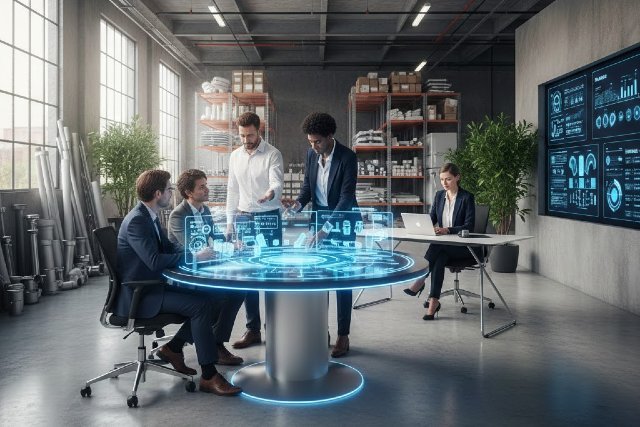
“Ecosystem” is real: shippers, carriers, terminals, warehouses, and maintenance teams all impact the outcome. Kaleris positions its platform around enabling collaboration and reducing data gaps at execution points.
A simple rule: if one team can change a decision, they need access to the same operational truth.
FAQs about Kaleris and connected supply chain execution
What is Kaleris?
Kaleris is a provider of supply chain execution and visibility software used to improve real-time control and collaboration across yard operations, transportation workflows, terminals, and ocean-related operations.
What problem does Kaleris solve?
Kaleris targets the data gaps and “dark spots” that happen at critical execution points — like yards and terminals — where delays, dwell, and cost exposure typically accumulate.
Is Kaleris only for yards?
No. While Kaleris is well-known for yard management, it also supports broader execution and visibility across connected operational domains (including terminal operations and transportation execution workflows).
What results can a Kaleris YMS deliver?
Case studies report outcomes like reduced reefer hours, improved productivity, and lower operational expenses. For instance, Bob Evans Farms reported nearly 40% reduction in loaded reefer hours and substantial cost savings tied to lower idle time after adopting Kaleris YMS.
How does Kaleris improve supply chain resilience?
Resilience improves when operations can detect disruptions early and coordinate responses quickly. By unifying execution events and visibility across nodes, Kaleris aims to reduce blind handoffs and accelerate decision-making.
Conclusion: Why Kaleris matters for modern supply chains
In a world where customers expect faster delivery and disruptions are routine, supply chain performance increasingly depends on what happens at the execution layer — yards, terminals, and handoffs between systems and partners. Kaleris focuses on connecting that ecosystem by consolidating operational execution data across nodes and modes, reducing data gaps, and enabling real-time collaboration where delays and costs tend to originate.
If your operation already has WMS/TMS/ERP in place but still struggles with trailer hunting, gate congestion, dwell, missed appointments, or preventable accessorials, a connected execution approach is often the fastest path to measurable gains. And for many organizations, that’s exactly where Kaleris fits: turning fragmented execution into a coordinated, visible, and optimizable supply chain ecosystem.












Leave a comment