

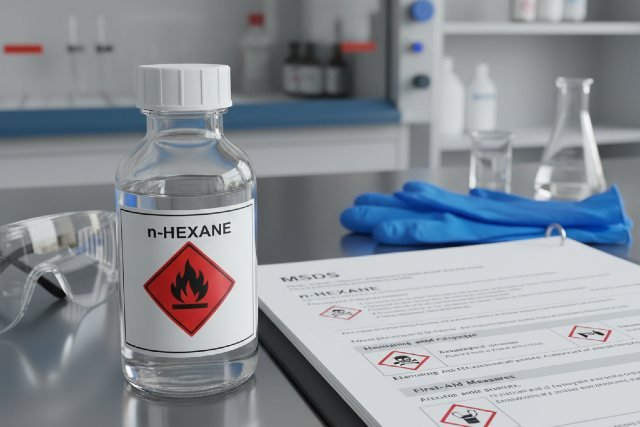

Understanding the MSDS of n-Hexane
The MSDS of n-hexane (Material Safety Data Sheet) is an essential safety document detailing its chemical properties, potential hazards, and safety measures. Whether used in laboratories or manufacturing environments, understanding the MSDS of n-hexane is vital to prevent exposure risks and ensure a safe workplace.
n-Hexane is a volatile, flammable liquid hydrocarbon widely used as a solvent in industrial cleaning, adhesives, and extraction processes. However, improper handling can lead to serious health effects, including neurotoxicity and respiratory irritation.
What is n-Hexane?
n-Hexane (chemical formula C₆H₁₄) is a colorless liquid derived from crude oil. It belongs to the family of aliphatic hydrocarbons and evaporates quickly at room temperature.
| Property | Description |
|---|---|
| Chemical Name | n-Hexane |
| Molecular Formula | C₆H₁₄ |
| Molar Mass | 86.18 g/mol |
| Boiling Point | 68.7°C (156°F) |
| Flash Point | -22°C (-7.6°F) |
| Appearance | Clear, colorless liquid |
| Odor | Gasoline-like odor |
| Solubility in Water | Insoluble |
| Vapor Pressure (20°C) | 17.6 kPa |
Hazard Identification (MSDS Section 2)
The MSDS of n-hexane classifies it as a highly flammable liquid and vapor. It is also toxic upon prolonged exposure due to its effects on the nervous system.
Key Hazards
- Flammability: Easily ignites and produces explosive vapors.
- Toxicity: Prolonged inhalation causes dizziness, headaches, or nerve damage.
- Environmental Impact: Harmful to aquatic life with long-lasting effects.
GHS Classification
- Flammable Liquids: Category 2
- Aspiration Hazard: Category 1
- Specific Target Organ Toxicity (Repeated Exposure): Category 2
- Acute Aquatic Toxicity: Category 2
Signal Word: Danger
Hazard Statements:
- H225: Highly flammable liquid and vapor
- H304: May be fatal if swallowed and enters airways
- H336: May cause drowsiness or dizziness
- H373: Causes damage to organs through prolonged exposure
Composition and Ingredients
The MSDS of n-hexane specifies that it contains 95–99% n-hexane with trace impurities of other hexane isomers such as 2-methylpentane and 3-methylpentane.
First-Aid Guidelines (MSDS Section 4)
Immediate action can prevent severe health consequences. Follow these first-aid procedures in case of exposure:
Inhalation
- Move the person to fresh air immediately.
- Loosen tight clothing and ensure easy breathing.
- If symptoms persist (headache, dizziness, nausea), seek medical attention.
Skin Contact
- Remove contaminated clothing and wash skin thoroughly with soap and water.
- Seek medical attention if irritation develops.
Eye Contact
- Rinse eyes with plenty of clean water for at least 15 minutes.
- Avoid rubbing eyes; seek medical care immediately.
Ingestion
- Do not induce vomiting.
- Rinse mouth with water.
- Contact a poison control center or doctor right away.
Fire-Fighting Measures (MSDS Section 5)
n-Hexane is highly flammable and may form explosive mixtures with air.
Recommended Extinguishing Media
- Foam
- Carbon dioxide (CO₂)
- Dry chemical powder
Fire Precautions
- Remove ignition sources.
- Use self-contained breathing apparatus (SCBA) for firefighting.
- Cool exposed containers with water spray.
Accidental Release Measures
To manage spills or leaks safely:
- Evacuate unnecessary personnel.
- Remove all ignition sources.
- Absorb spilled liquid using inert material (sand or vermiculite).
- Dispose of waste according to local environmental regulations.
Handling and Storage (MSDS Section 7)
Safe Handling Tips
- Use in well-ventilated areas.
- Avoid breathing vapors.
- Keep away from heat, sparks, or flames.
Storage Requirements
- Store in tightly closed containers.
- Keep in a cool, dry, and well-ventilated place.
- Ground containers to prevent static discharge.
Exposure Controls and Personal Protection
Permissible Exposure Limits
| Agency | Limit |
|---|---|
| OSHA PEL | 500 ppm (1,800 mg/m³) |
| ACGIH TLV | 50 ppm (176 mg/m³) |
Protective Equipment
- Respiratory Protection: Use NIOSH-approved respirators when ventilation is inadequate.
- Eye Protection: Wear safety goggles.
- Hand Protection: Use chemical-resistant gloves (e.g., nitrile).
- Clothing: Wear flame-resistant lab coats.
Toxicological Information
Long-term exposure to n-hexane can cause peripheral neuropathy, characterized by numbness and muscle weakness.
Animal studies have shown that chronic inhalation may lead to nervous system degeneration.
Environmental Impact
According to the MSDS of n-hexane, the substance is toxic to aquatic organisms and should not be discharged into drains or waterways. It evaporates rapidly but contributes to air pollution due to volatile organic compound (VOC) emissions.
Disposal Considerations
- Dispose of n-hexane and contaminated materials as hazardous waste.
- Follow local, regional, and international waste regulations (e.g., EPA 40 CFR Part 261).
- Avoid open-air disposal or incineration without proper facilities.
Frequently Asked Questions (FAQ)
1. What is the main hazard of n-hexane?
The main hazard is neurotoxicity due to prolonged exposure and high flammability.
2. Can n-hexane exposure cause permanent nerve damage?
Yes. Chronic exposure may lead to permanent peripheral nerve damage if safety precautions are ignored.
3. How should n-hexane be stored safely?
Store in cool, dry, and well-ventilated areas away from open flames and oxidizers.
4. Is n-hexane harmful to the environment?
Yes, it’s toxic to aquatic life and contributes to air pollution.
Conclusion: Safe Practices for Handling n-Hexane
Understanding the MSDS of n-hexane is crucial for anyone working with this chemical. Always prioritize ventilation, use PPE, and follow first-aid guidelines to minimize risks. Proper handling, storage, and disposal not only protect workers but also prevent environmental harm.
For further reading, consult the OSHA Chemical Safety Data Sheet or NIOSH Pocket Guide for up-to-date exposure limits and control measures.












Leave a comment