

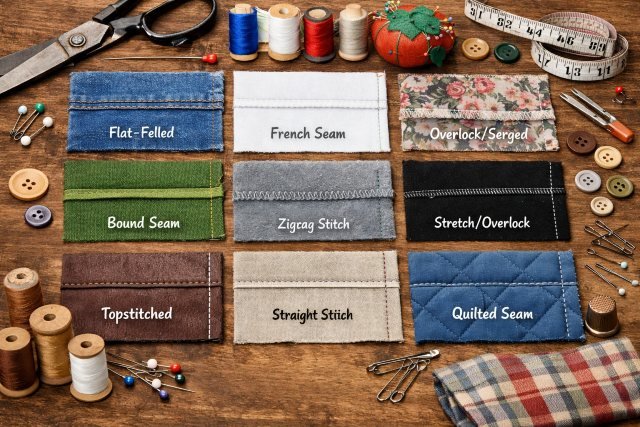

Choosing the right seam is one of the fastest ways to level up your sewing. The same pattern can look homemade or high-end depending on the Nahttypen (seam types) you use — and whether they match the fabric’s weight, stretch, and fraying behavior. In this guide, you’ll learn how to pick the best seam type for every fabric category, from delicate chiffon to heavy denim to stretchy jersey. You’ll also get practical tips, real-world examples, and clear answers to the most common seam questions so you can sew stronger, cleaner, longer-lasting garments.
Whether you sew at home or want results that feel “ready-to-wear,” understanding Nahttypen helps you avoid fraying, puckering, bulky seams, and seams that split after a few wears. Industry standards such as ISO 4916 even classify seam types into formal categories because seam choice significantly impacts performance and durability.
What Are Nahttypen?
Nahttypen simply means seam types — the different ways fabric pieces are joined together. Seam types vary in:
- strength
- elasticity
- bulk (thickness)
- appearance on the inside and outside
- resistance to fraying
- comfort against the skin
In professional garment production, seam types are standardized and classified because they directly affect garment quality, durability, and fit. If you’ve ever had a seam pop when you squat, or a lightweight blouse look messy inside, that wasn’t just “bad sewing” — it was often the wrong seam type for the fabric.
Key takeaway:
The best seam isn’t always the strongest — it’s the one that matches the fabric’s behavior and the garment’s purpose.
How to Choose the Right Seam Type: 4 Quick Factors
Before you sew, check these four things. They instantly guide you toward the right Nahttypen choice.
1) Fabric weight and thickness
Heavy fabrics need seams that lie flat and resist abrasion. Light fabrics need seams that don’t show through.
2) Does it fray?
Fraying fabrics need enclosed seams (like French seams) or finished edges (like overlock or binding).
3) Does it stretch?
Stretch fabrics need stretch-friendly stitching (overlock, zigzag, stretch stitch) or seams can break.
4) Where is the stress?
Areas like crotches, armholes, side seams, and seat seams need stronger construction.
The Most Important Nahttypen (Seam Types) You Actually Need
You don’t need 30 seam variations to sew professionally. These core seam types cover nearly every fabric you’ll encounter.
1) Plain Seam (Basic Seam) — The Everyday Standard
A plain seam is the most common seam type: stitch two pieces right sides together, press, and finish the seam allowances so the fabric doesn’t fray.
Best for:
- cotton woven fabrics
- linen
- viscose/rayon woven
- poplin
- general everyday woven fabrics
Strengths:
- fast and versatile
- easy to adjust and tailor
- works in almost any pattern
Weaknesses:
- must be finished (unless fabric doesn’t fray)
- not the cleanest seam for sheer fabrics
Pro tip:
Pressing makes this seam look 10× better. Press after sewing, then press the seam allowances open or to one side depending on the garment.
2) French Seam — Best for Sheer and Delicate Fabrics
A French seam encloses raw edges completely, creating a clean finish inside the garment. It’s sewn in two passes: first wrong sides together, then right sides together.
Best for:
- chiffon
- organza
- silk
- voile
- lightweight cotton
- delicate viscose
Why it works:
It prevents fraying and looks elegant on the inside — perfect for fabric that’s transparent or prone to unraveling.
When to avoid it:
In thick fabrics (like denim), it creates bulk and stiffness.
Actionable tip:
Use a smaller seam allowance and trim carefully between passes for a crisp result.
3) Flat-Felled Seam (Kappnaht) — Strongest for Denim and Heavy Wovens
The flat-felled seam is the classic jeans seam. It encloses raw edges and creates a strong, flat, durable construction. It’s also often visible on the outside as a design detail.
Best for:
- denim
- canvas
- heavy twill
- workwear fabrics
- structured cotton
Why it’s so durable:
It locks the seam allowances inside and distributes stress across multiple lines of stitching, making it ideal for high-wear garments.
Pro tip:
Use a jeans needle and slightly longer stitch length. Thick fabrics can look messy with stitches that are too short.
4) Overlock/Serger Seam — Best for Jersey and Stretch Fabrics
An overlock seam sews and finishes the edge in one step. It’s the go-to seam for knitwear because it stretches with the fabric.
Best for:
- jersey
- rib knit
- interlock
- stretch fabrics
- athletic and lounge fabrics
Why it works:
Stretch fabrics need a seam that can expand and recover without snapping. Overlock stitching provides that flexibility.
No serger?
Use these alternatives on a regular sewing machine:
- narrow zigzag
- stretch stitch
- lightning stitch (if available)
Actionable tip:
Avoid pulling the fabric while sewing jersey — this causes wavy seams. Let the feed dogs move the fabric naturally.
5) Bound Seams (Hong Kong Finish) — Clean, Luxury Inside Finishing
A bound seam finishes seam allowances by wrapping them in bias tape. A Hong Kong finish is a popular couture-style version used in unlined jackets, coats, and structured garments.
Best for:
- medium to heavy woven fabrics
- coats, blazers, skirts
- garments where the inside is visible
Why it’s useful:
It prevents fraying and looks premium without needing lining.
Pro tip:
Choose lightweight bias tape so you don’t add bulk.
Nahttypen by Fabric: The Best Seam Type for Each Fabric Category
This is the most practical part of the guide — use it as your seam “cheat sheet.”
Seam Types for Lightweight and Sheer Fabrics (Chiffon, Organza, Silk)
The biggest problem with sheer fabrics is that every seam shows. The second biggest is fraying.
Best Nahttypen choices:
- French seam (top choice)
- very narrow plain seam + delicate finish
Why it works:
French seams hide raw edges and look clean even when visible through the fabric.
Real-world example:
A chiffon blouse with a serged seam often looks bulky and visible through the fabric. A French seam makes it look boutique-level.
Seam Types for Everyday Wovens (Cotton, Linen, Rayon Wovens)
These fabrics are forgiving but still benefit from the right finish.
Best Nahttypen choices:
- plain seam + overlock finish
- plain seam + zigzag finish
- bound seams for special garments
Why it works:
You get reliable construction with manageable bulk and easy pressing.
Actionable tip:
For linen, finish seam allowances early because linen frays easily during handling.
Seam Types for Heavy Wovens (Denim, Canvas, Corduroy)
Heavy fabrics need seams that are strong and not too bulky.
Best Nahttypen choices:
- flat-felled seam
- double-stitched plain seam
- lapped seams for structured pieces
Why it works:
Flat-felled seams resist abrasion and survive repeated washing, which is why they’re standard in jeans.
Seam Types for Knit and Stretch Fabrics (Jersey, Spandex Blends)
Knit fabrics can stretch, curl, and distort. The wrong seam will snap or ripple.
Best Nahttypen choices:
- overlock seam
- stretch stitch
- narrow zigzag seam
Why it works:
These stitches can stretch with the fabric and recover without breaking.
Actionable tip:
Use a ballpoint or stretch needle. Skipped stitches often happen because the needle type doesn’t match the fabric.
Seam Types for Fraying or Loose Weave Fabrics (Tweed, Bouclé, Open Weaves)
These fabrics are beautiful but notoriously messy at the seam allowance.
Best Nahttypen choices:
- bound seams (Hong Kong finish)
- French seams (if fabric is not too bulky)
- plain seam + overlock + extra stabilization
Why it works:
Loose weaves can fray aggressively. Finishing the seam allowance becomes non-negotiable.
Pro tip:
Stitch a stabilizing line in the seam allowance before construction to reduce distortion.
Common Nahttypen Mistakes (and How to Fix Them)
Mistake 1: Using French seams on thick fabric
Result: bulky, stiff seams that ruin drape and comfort.
Fix: switch to flat-felled seams or plain seams with clean finishing.
Mistake 2: Using a straight stitch on jersey
Result: seam pops when stretched.
Fix: use overlock, zigzag, or stretch stitch.
Mistake 3: Not pressing seams as you sew
Result: uneven seams, puckering, poor shape.
Fix: press after each seam. This is the “invisible professional step.”
Mistake 4: Wrong stitch length and thread tension
Result: puckering, weak seams, uneven topstitching.
Fix: test on scraps. Adjust stitch length to fabric thickness and choose the right needle.
Industry vs. Home Sewing: What You Should Copy
Garment factories choose seam types for:
- durability
- speed
- repeatability
- fabric efficiency
- wash performance
Home sewists can borrow the best parts of this logic:
- use industrial seam types where strength matters
- use couture finishing where beauty matters
- always test on scraps first
Example:
Use a flat-felled seam for denim side seams (industrial logic), but press carefully and topstitch neatly (couture quality).
Mini Case Study: The Same Pattern, Three Fabrics, Three Seam Types
1) Chiffon blouse
- Plain seam + overlock often looks visible and bulky
- French seam looks clean and nearly invisible
Outcome: more elegant, better drape, more “store-bought” finish
2) Denim shirt
- Plain seam + zigzag can fray and weaken over time
- Flat-felled seam stays strong and flat
Outcome: longer-lasting, professional appearance
3) Jersey t-shirt
- Straight stitch pops under stress
- Overlock seam stretches comfortably
Outcome: better comfort, no snapped seams
FAQs
What is the best seam type for beginners?
A plain seam is the best starting seam type because it’s easy to sew, easy to press, and works for most woven fabrics.
What seam should I use for chiffon or silk?
Use a French seam because it encloses raw edges and looks clean in sheer fabrics where seams may show through.
What is the strongest seam type?
A flat-felled seam is one of the strongest seam types because it encloses raw edges and uses multiple lines of stitching for reinforcement.
What seam should I use for jersey?
Use an overlock seam, stretch stitch, or narrow zigzag, because these seam types stretch with the fabric and won’t pop.
Can I sew professional seam types without a serger?
Yes. Many seam types (plain seam, French seam, flat-felled seam, bound seams) can be sewn on a regular sewing machine. For jersey, use zigzag or stretch stitches.
Conclusion: How Nahttypen Make Your Sewing Look Professional
Understanding Nahttypen is one of the most powerful sewing skills you can learn because it improves quality instantly. When you match seam type to fabric behavior, you get cleaner construction, stronger garments, and fewer frustrating failures.
Here’s the simplest way to remember it:
- French seam for delicate, sheer, fraying fabrics
- Plain seam + finish for everyday woven fabrics
- Flat-felled seam for denim and heavy fabrics
- Overlock/stretch seams for jersey and stretch fabrics
If you want your garments to last longer, look more polished, and feel better to wear — start choosing seam types intentionally. Your sewing will improve faster than you expect.















Leave a comment