

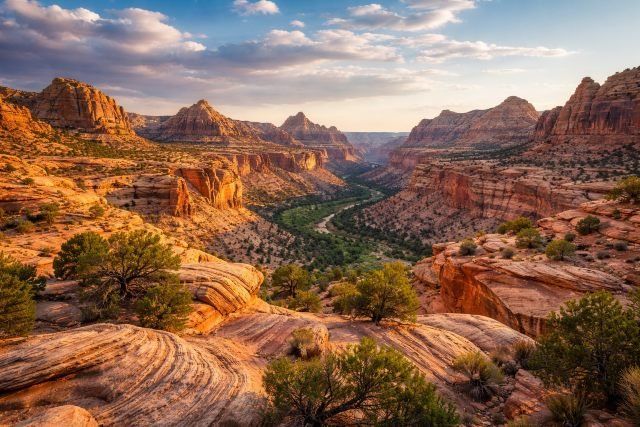

The San Rafael Swell is one of Utah’s most dramatic and lesser-known landscapes, offering a raw, immersive experience for travelers seeking history, geology, and outdoor adventure. Located in central Utah, the San Rafael Swell is a massive geological uplift filled with rugged canyons, colorful rock formations, and remote desert beauty. Within the first moments of arrival, visitors realize that the San Rafael Swell feels untouched and profoundly wild.
Unlike crowded national parks, the San Rafael Swell provides solitude and authenticity. This travel guide explores the region’s geological origins, rich human history, and must-see attractions while offering practical insights for responsible and rewarding travel.
What Is the San Rafael Swell?
The San Rafael Swell is a large, dome-shaped geological uplift stretching nearly 75 miles long and 40 miles wide. It was formed millions of years ago when tectonic forces pushed layers of sedimentary rock upward, creating steep cliffs, deep canyons, and exposed rock layers.
Today, the San Rafael Swell is managed primarily by the Bureau of Land Management. It remains one of the largest undeveloped regions in the continental United States, making it a prime destination for hikers, photographers, geologists, and off-road explorers.
According to the U.S. Geological Survey, the San Rafael Swell is considered one of the most geologically significant uplift structures in North America.
Geological History of the San Rafael Swell
How the San Rafael Swell Was Formed
The San Rafael Swell began forming approximately 70 million years ago during the Laramide Orogeny, a mountain-building event that also created the Rocky Mountains. Instead of forming sharp peaks, the region uplifted into a broad dome.
Over millions of years, erosion carved the uplift into dramatic features such as mesas, slot canyons, and cliffs. Wind and water exposed layers of sandstone, shale, and limestone that now tell a vivid geological story.
Rock Layers and Unique Formations
The San Rafael Swell showcases some of the most colorful rock layers in Utah. Navajo Sandstone, Wingate Sandstone, and Morrison Formation layers are clearly visible throughout the region.
These formations provide valuable insights into ancient environments, including deserts, rivers, and shallow seas. The Utah Geological Survey frequently references the San Rafael Swell as an open-air textbook for earth science.
Human History of the San Rafael Swell
Indigenous Presence and Rock Art
Long before modern explorers arrived, Indigenous peoples inhabited the San Rafael Swell. Fremont Culture and ancestral Puebloan communities left behind petroglyphs and pictographs that remain visible today.
Sites such as the Buckhorn Wash Panel offer some of the most impressive rock art in the American Southwest. These panels provide insight into daily life, spiritual beliefs, and survival strategies of early inhabitants.
The Bureau of Land Management emphasizes the importance of preserving these fragile cultural resources for future generations.
Outlaws, Pioneers, and the Old West
During the late 1800s, the San Rafael Swell became a refuge for outlaws and pioneers. Its maze-like terrain made it ideal for hiding from law enforcement and navigating cattle drives.
Historic sites such as the Hole-in-the-Rock Road reflect the hardships faced by early settlers crossing this unforgiving landscape. The region’s isolation shaped its reputation as both dangerous and alluring.
Top Attractions in the San Rafael Swell
Goblin Valley State Park
Goblin Valley State Park is one of the most recognizable attractions within the San Rafael Swell. It features thousands of mushroom-shaped rock formations known as hoodoos.
Visitors can freely explore the valley floor, making it a unique destination for families, photographers, and casual hikers. The park is also an International Dark Sky Park, offering exceptional stargazing opportunities.
Little Wild Horse Canyon
Little Wild Horse Canyon is a world-renowned slot canyon located in the San Rafael Swell. Its narrow passages, smooth walls, and dramatic light make it a favorite among hikers.
The canyon is accessible to most skill levels during dry conditions. According to the National Park Service, slot canyons like this one are among the most visually striking geological features in the Southwest.
The Wedge Overlook
Often called the “Little Grand Canyon,” the Wedge Overlook offers sweeping views of the San Rafael River cutting through layers of rock. The overlook provides dramatic vistas without the crowds found in more famous parks.
Sunrise and sunset are particularly spectacular, as shifting light highlights the canyon’s depth and texture.
Outdoor Activities in the San Rafael Swell
Hiking and Backpacking
Hiking in the San Rafael Swell ranges from short scenic walks to multi-day backpacking routes. Trails often follow washes, ridgelines, and canyon floors.
Because many areas are unmarked, navigation skills are essential. Experienced hikers appreciate the freedom and challenge that this remote terrain offers.
Off-Roading and Scenic Drives
The San Rafael Swell is a popular destination for off-road enthusiasts. Dirt roads and rugged tracks provide access to remote viewpoints and historical sites.
High-clearance vehicles are recommended, especially after rain. The Bureau of Land Management advises travelers to check road conditions before entering the region.
Photography and Stargazing
Photographers are drawn to the San Rafael Swell for its dramatic light, textures, and wide-open landscapes. Minimal light pollution makes night photography especially rewarding.
Astrophotographers often capture the Milky Way over rock formations, a reminder of how untouched the area remains.
Wildlife and Natural Environment
Despite its arid appearance, the San Rafael Swell supports diverse wildlife. Mule deer, desert bighorn sheep, and golden eagles are commonly spotted.
Reptiles, small mammals, and native plants have adapted to the harsh desert climate. According to the Utah Division of Wildlife Resources, preserving these ecosystems depends on responsible recreation.
Visitors are encouraged to follow Leave No Trace principles to protect fragile habitats.
Best Time to Visit the San Rafael Swell
Spring and fall are the most popular seasons to visit the San Rafael Swell. Temperatures are moderate, and conditions are ideal for hiking and exploration.
Summer can be extremely hot, with limited shade and water sources. Winter brings cold temperatures and occasional snow, but also solitude and dramatic scenery.
Checking weather forecasts and planning accordingly is essential for a safe and enjoyable trip.
Travel Tips for Visiting the San Rafael Swell
Traveling in the San Rafael Swell requires preparation and self-reliance. Cell service is limited, and services such as gas and water are scarce.
Carrying extra water, navigation tools, and emergency supplies is strongly recommended. Informing someone of your travel plans adds an extra layer of safety.
The Bureau of Land Management provides updated travel advisories and maps for visitors.
Common Questions About the San Rafael Swell
Is the San Rafael Swell a National Park?
No, the San Rafael Swell is not a national park. It is primarily managed by the Bureau of Land Management, which allows for a wider range of recreational activities.
Do You Need Permits to Visit the San Rafael Swell?
Most areas do not require permits for day use. Some activities, such as organized events or commercial use, may require special permission.
Is the San Rafael Swell Family-Friendly?
Many areas, including Goblin Valley, are suitable for families. However, remote locations require careful planning and supervision.
Conclusion: Why the San Rafael Swell Belongs on Your Travel List
The San Rafael Swell is a destination defined by scale, solitude, and story. Its layered geology, rich human history, and striking attractions create an experience unlike any other in the American Southwest.
For travelers willing to venture beyond crowded destinations, the San Rafael Swell offers discovery, reflection, and adventure in equal measure. With thoughtful planning and respect for the land, a journey through the San Rafael Swell becomes not just a trip, but a lasting connection to one of Utah’s most remarkable landscapes.













Leave a comment