

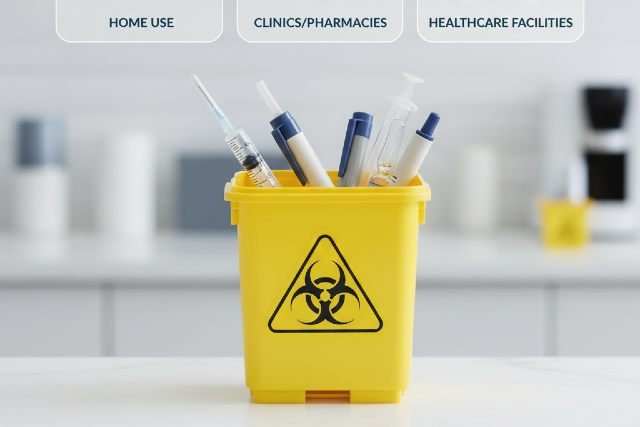

Sharps bin guidelines are critical for ensuring safe disposal of needles and other sharp medical instruments in homes, clinics, and healthcare environments. A sharps bin is designed to prevent injuries, infections, and environmental contamination caused by improper handling of medical sharps. When used correctly, it protects patients, caregivers, healthcare workers, and waste handlers from serious health risks.
This article explains sharps bin guidelines in detail, covering home use, clinical settings, and large healthcare facilities. It also addresses legal requirements, safety best practices, and common mistakes, helping you stay compliant and safe.
What Is a Sharps Bin?
A sharps bin is a rigid, puncture-resistant container used to safely dispose of medical sharps such as needles, syringes, lancets, and scalpels. These containers are made from durable plastic and feature secure lids to prevent sharps from protruding or spilling. Most sharps bins are clearly marked with biohazard symbols to signal potential risk.
Sharps bins are a critical part of medical waste management and are required in many healthcare and home-care situations where injections or blood sampling occur.
Why Sharps Bin Guidelines Matter
Sharps bin guidelines exist to reduce the risk of needle-stick injuries and the spread of bloodborne infections such as HIV and hepatitis B and C. Improper disposal places sanitation workers, family members, and healthcare staff at risk. According to the World Health Organization, unsafe sharps disposal contributes to millions of preventable infections worldwide each year.
Following approved sharps bin guidelines also helps individuals and organizations meet legal and regulatory obligations while protecting the environment from hazardous waste contamination.
Sharps Bin Guidelines for Home Use
Many individuals use sharps at home for diabetes management, fertility treatments, hormone therapy, or other medical needs. Home users must follow proper sharps bin guidelines to prevent accidental injury to household members and pets.
Sharps should be placed directly into an approved sharps bin immediately after use. Needles should never be recapped, bent, or broken before disposal. The sharps bin should be kept in a stable, upright position and stored out of reach of children. Once the container reaches the recommended fill line, usually around three-quarters full, it should be securely sealed.
Disposal options for full sharps bins at home typically include pharmacy take-back programs, local medical waste collection services, or mail-back disposal programs, depending on regional regulations.
Sharps Bin Guidelines for Clinics
Clinics generate sharps waste daily and must adhere to stricter sharps bin guidelines than home users. Sharps bins in clinical environments should be placed as close as possible to the point of use to reduce handling and movement of exposed needles.
All clinic staff should be trained in sharps safety, including correct disposal procedures and response actions in the event of a needle-stick injury. Sharps bins must be clearly labeled, regularly inspected, and replaced before they become overfilled. Proper documentation and waste tracking are also essential for compliance with healthcare regulations.
Sharps Bin Guidelines for Healthcare Settings
Hospitals and large healthcare facilities follow comprehensive sharps bin guidelines established by regulatory bodies such as OSHA, the CDC, and the World Health Organization. These guidelines govern every stage of sharps waste management, from disposal and storage to transport and treatment.
Sharps bins must be used in all patient care areas, operating rooms, laboratories, and treatment rooms. Filled containers are stored in secure waste holding areas before being collected by licensed medical waste contractors. Treatment methods such as incineration or autoclaving are used to neutralize biological hazards before final disposal.
Healthcare facilities are also required to maintain detailed records, conduct safety audits, and implement injury prevention programs to minimize sharps-related incidents.
Sharps Bin Color Coding and Identification
Sharps bins are often color-coded to distinguish different types of medical waste. While color standards vary by country, yellow and red bins are commonly used for infectious sharps. Proper labeling ensures that waste handlers can quickly identify hazards and apply the correct disposal procedures.
Facilities should always follow local and national regulations when selecting sharps bin colors and labels.
When to Seal and Replace a Sharps Bin
A sharps bin should be sealed and replaced as soon as it reaches the indicated fill line or when it becomes three-quarters full. Overfilled sharps bins significantly increase the risk of needle-stick injuries and are a common cause of workplace accidents.
Once sealed, a sharps bin should never be reopened or reused. It must be disposed of through approved medical waste channels.
Common Sharps Bin Mistakes to Avoid
Improper sharps disposal often results from overfilling containers, using unapproved household containers, or mixing sharps with general waste. Leaving sharps bins unsecured or ignoring disposal timelines also increases risk. Avoiding these mistakes is essential for maintaining a safe environment in both home and professional settings.
Environmental and Public Health Impact
Incorrect sharps disposal can harm the environment by contaminating landfills and water systems. It also poses a serious threat to waste management workers and the general public. Following established sharps bin guidelines supports public health initiatives and responsible waste management practices.
Frequently Asked Questions About Sharps Bins
A sharps bin should always be used instead of household containers because it is specifically designed to prevent punctures and leaks. Sharps bins are generally required by law in healthcare settings and are strongly recommended for home use. Once a sharps bin is sealed, it must be disposed of through approved programs and should never be reused.
Conclusion
Following proper sharps bin guidelines is essential for protecting people, communities, and the environment from preventable harm. Whether you are disposing of needles at home, managing waste in a clinic, or overseeing a healthcare facility, correct sharps bin use ensures safety, compliance, and peace of mind.
By understanding how to use, store, and dispose of a sharps bin correctly, you take an important step toward responsible medical waste management and safer healthcare practices.














Leave a comment