

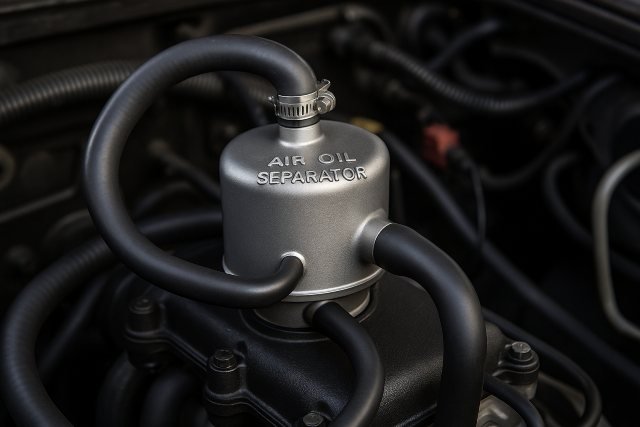

Understanding the Role of an Air Oil Separator
If you’ve ever wondered how your engine stays clean and efficient over time, one key component behind the scenes is the air oil separator. Found in performance and modern engines alike, this small but powerful device helps reduce oil contamination, improve combustion, and extend engine life.
Simply put, an air oil separator prevents oil from entering the intake system — a common issue that can lead to carbon buildup, reduced performance, and higher emissions. In this article, we’ll explore what it does, how it works, and why every vehicle owner should care about it.
What Is an Air Oil Separator?
An air oil separator (AOS) is a filtration device installed in the crankcase ventilation system of an internal combustion engine. Its primary job is to separate oil mist and vapors from the blow-by gases before those gases are redirected into the intake manifold.
When an engine runs, combustion gases escape past the piston rings (known as blow-by). These gases contain a mixture of air, fuel vapors, and fine oil mist. Without an AOS, that oil mist is sucked back into the intake, causing sludge and carbon deposits on intake valves and pistons.
How Does an Air Oil Separator Work?
Here’s how the system functions step-by-step:
- Collection of Blow-By Gases:
The crankcase ventilation system collects gases escaping from the cylinders. - Separation Process:
Inside the AOS, centrifugal force, baffles, or fine mesh media separate the oil particles from the air. - Oil Return:
The separated oil drains back into the engine’s oil pan or reservoir. - Clean Air Recirculation:
The cleaned air or gas is rerouted into the intake manifold for re-combustion.
In short: The air oil separator ensures only clean air re-enters the intake, while oil is safely returned to the lubrication system.
Air Oil Separator vs. Catch Can: What’s the Difference?
Although people often use the terms interchangeably, there’s a key difference between a catch can and an air oil separator:
| Feature | Air Oil Separator | Oil Catch Can |
|---|---|---|
| Oil Management | Returns oil to the engine | Traps oil for manual draining |
| Maintenance | Low-maintenance, self-draining | Requires regular emptying |
| Complexity | More advanced (uses filtration/baffling) | Simpler design |
| Ideal For | Long-term, high-performance engines | Budget or DIY setups |
If you drive a performance or turbocharged car, an air oil separator is the better long-term solution due to its efficiency and reduced maintenance needs.
Why Is an Air Oil Separator Important?
Installing an AOS offers several critical benefits:
- Improved Engine Performance: Keeps intake components clean for better airflow.
- Reduced Oil Consumption: Recycles oil instead of burning it.
- Longer Engine Life: Prevents carbon deposits on pistons and valves.
- Lower Emissions: Reduces oil vapor re-entry into the combustion chamber.
- Enhanced Reliability: Especially valuable in turbocharged or supercharged engines.
Did you know? In turbo engines, oil mist can accumulate in the intercooler, reducing its cooling efficiency by up to 20%. An air oil separator prevents this problem entirely.
Types of Air Oil Separators
There are several designs of AOS units, each suited to different applications:
1. Baffled Air Oil Separator
Uses internal baffles or chambers to slow airflow, allowing oil droplets to condense and settle.
2. Cyclonic Separator
Creates a spinning motion that uses centrifugal force to fling oil away from the airflow.
3. Filter or Mesh-Type Separator
Uses fine metal mesh or media to trap oil mist particles before returning clean air to the intake.
Each type has its pros and cons depending on engine design, space, and performance requirements.
Signs You Might Need an Air Oil Separator
Here are common symptoms that suggest your engine could benefit from an AOS:
- Excessive oil in the intake manifold or throttle body
- Blue smoke from the exhaust (oil burning)
- Decreased engine performance or rough idling
- Heavy carbon buildup on intake valves (especially in direct-injection engines)
- Higher-than-normal oil consumption
If you notice these signs, installing an air oil separator can prevent further damage and restore lost efficiency.
How to Install an Air Oil Separator
Installation varies by vehicle, but the general process includes:
- Locate the PCV (Positive Crankcase Ventilation) system lines.
- Mount the air oil separator in a cool, accessible location (often near the firewall).
- Connect the inlet hose from the crankcase and the outlet hose back to the intake.
- Secure all fittings and ensure proper drainage to the oil pan.
Tip: Always use high-temperature, oil-resistant hoses and clamps for reliability.
Maintenance Tips for Air Oil Separators
Although many systems are self-draining, some still require inspection. Here’s how to keep your AOS performing at its best:
- Check for blockages or leaks every oil change.
- Clean or replace filters (if equipped) annually.
- Ensure the return line to the oil pan is clear and unobstructed.
Regular maintenance ensures your air oil separator continues to protect your engine for years.
Best Air Oil Separator Brands
Some reputable brands known for high-quality AOS systems include:
- Mishimoto
- Grimmspeed
- Crawford Performance
- Radium Engineering
- JLT Performance
Each offers models tailored to specific vehicle makes and power levels.
FAQs About Air Oil Separators
1. Do all cars need an air oil separator?
Not necessarily. Stock engines with mild driving conditions may not need one, but performance, turbocharged, and direct-injection engines benefit greatly.
2. Will an AOS void my warranty?
Most high-quality systems are designed to work within OEM specifications, but always check your manufacturer’s policy.
3. Can I install it myself?
Yes — if you’re mechanically inclined. Otherwise, professional installation ensures correct hose routing and drainage.
Conclusion: Why Every Engine Deserves an Air Oil Separator
An air oil separator is one of the smartest upgrades you can make to protect your engine. By keeping oil out of the intake, it enhances performance, reduces maintenance costs, and prolongs engine life — especially in high-performance or forced-induction setups.
Whether you’re tuning your car or simply care about longevity, investing in a quality air oil separator pays off in the long run.












Leave a comment