

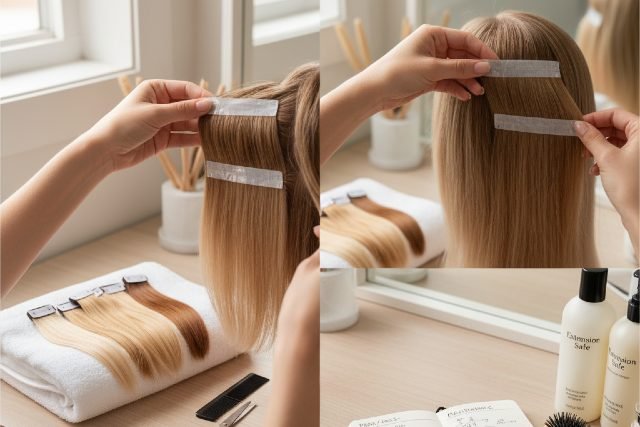

Tape in hair extensions have become one of the most popular semi-permanent extension methods thanks to their natural look, lightweight feel, and versatility. Whether you want extra length, volume, or a complete hair transformation, tape in hair extensions offer a salon-quality upgrade without heavy maintenance.
In this detailed guide, we’ll cover the pros, cons, costs, installation process, lifespan, and expert-approved maintenance tips — so you know exactly what to expect before investing.
What Are Tape In Hair Extensions?
Tape in hair extensions are thin, pre-taped wefts of hair — usually 1 to 1.5 inches wide — that are applied using medical-grade adhesive. A stylist sandwiches a thin section of your natural hair between two tapes, creating a secure yet flexible bond.
Why They’re Popular
- Lightweight and comfortable
- Blend seamlessly with natural hair
- Quick installation (30–90 minutes)
- Reusable with proper care
- Ideal for fine or thin hair
Tape-ins are considered one of the least damaging extension methods, especially compared to fusion or sew-in wefts.
Pros of Tape In Hair Extensions
Tape-ins come with numerous benefits that make them a top choice for both stylists and clients.
1. Extremely Natural Looking
The flat, thin wefts lie flush against the scalp, making them nearly invisible—even in fine hair. When matched properly, the extensions move naturally with your own hair.
2. Quick Installation
Unlike fusion extensions that require several hours, a full head of tape-ins can be installed in as little as 45 minutes to 1.5 hours.
3. Reusable for Multiple Installs
High-quality human hair tape-ins can be reused 2–4 times, making them cost-effective in the long run.
4. Lightweight & Comfortable
Because the wefts are thin and evenly distributed, they do not pull excessively on the scalp.
5. Low Damage Risk
When installed correctly, tape in hair extensions are among the least damaging extension types. They don’t require heat, chemicals, or tight braiding.
6. Suitable for Thin or Fine Hair
Tape-ins distribute weight evenly across the scalp, making them ideal for clients who struggle with other extension methods.
7. Easy to Style
You can curl, straighten, color (with caution), and style the extensions much like natural hair.
Cons of Tape In Hair Extensions
While tape-ins offer many benefits, they are not perfect. Consider the following drawbacks:
1. Require Regular Maintenance
The adhesive bonds move as your hair grows. Expect to re-install them every 6–8 weeks.
2. Not Ideal for Oily Scalps
Oil can weaken the adhesive. Clients with oily skin or who use oil-heavy hair products will experience faster slippage.
3. Limited Tension Styles
High ponytails, braids, or tight buns may reveal the tapes depending on placement.
4. Cannot Use Oil-Based Products Near the Roots
These can break down the bond and shorten lifespan.
5. Must Be Professionally Installed
DIY installs risk improper placement, tangling, or hair damage.
How Much Do Tape In Hair Extensions Cost?
The cost of tape ins depends on hair type, length, brand, and salon expertise.
Average Cost Breakdown
| Service Type | Price Range |
|---|---|
| Hair Extensions (Human Hair) | $150 – $500 |
| Installation | $150 – $400 |
| Reinstallation (every 6–8 weeks) | $80 – $200 |
| Removal | $50 – $150 |
| Total First-Time Cost | $300 – $900 |
Factors That Affect Pricing
- Hair length (14–24+ inches)
- Hair quality (Remy vs. non-Remy)
- Stylist experience
- Number of wefts required
- Coloring or blending services
Pro tip: Always choose 100% Remy human hair for the best durability and natural appearance.
How Long Do Tape In Hair Extensions Last?
Lifespan of the hair: 6–12 months
Lifespan of each install: 6–8 weeks
Proper maintenance and regular repositioning dramatically extend the life of the extensions.
How Tape In Hair Extensions Are Installed (Step-by-Step)
1. Consultation
Your stylist evaluates your hair type, color matches the extensions, and determines how many wefts are needed.
2. Hair Preparation
Hair must be washed with clarifying shampoo — no conditioner or oils — to ensure maximum adhesion.
3. Sectioning
The stylist creates clean, horizontal sections.
4. Applying the Tapes
The natural hair section is placed between two tapes like a small “sandwich.”
5. Blending & Styling
Once installed, the stylist cuts and blends the extensions for a seamless finish.
Maintenance Tips for Tape In Hair Extensions
Using proper techniques helps prevent slippage, extend lifespan, and maintain the health of your natural hair.
Daily Care Routine
- Brush hair gently 2–3 times/day using a loop or extension brush
- Never brush wet hair aggressively
- Keep oils and conditioners away from the roots
- Sleep with hair in a loose braid or silk bonnet
Washing Tips
- Wash hair 1–2 times per week
- Use sulfate-free, extension-safe shampoos
- Apply conditioner only from mid-shaft to ends
- Avoid rubbing or twisting hair when shampooing
Styling Tips
- Use heat protectant before curling or straightening
- Avoid high-tension hairstyles
- Keep heat tools below 350°F (177°C) to preserve hair quality
Swimming & Workout Guidelines
- Chlorine and salt water can tangle hair
- Wear a swim cap or apply protective leave-in conditioner
- Rinse immediately after swimming
Common Problems & How to Fix Them
1. Slipping or Falling Extensions
Cause: Oils, incorrect installation, or overdue maintenance
Fix: Clean section placement and professional reinstallation
2. Tangling or Matting
Cause: Sleeping with loose hair or using harsh products
Fix: Regular brushing and extension-safe conditioners on ends
3. Itching or Discomfort
Cause: Poor placement or product buildup
Fix: Removal, clarifying wash, and reinstallation
Who Are Tape In Hair Extensions Best For?
Ideal Candidates
Clients with thin, fine, or medium-density hair
Those wanting a natural, lightweight style
People looking for semi-permanent extensions
Anyone wanting quick installation and easy upkeep
Not Ideal For
Extremely oily scalps
Those who prefer high, tight ponytails daily
Individuals unable to commit to bi-monthly maintenance
Tape In Hair Extensions vs. Other Extension Types
| Extension Type | Pros | Cons |
|---|---|---|
| Tape-In | Natural look, lightweight, reusable, fast install | Needs 6–8 week maintenance |
| Sew-In (Weave) | Long-lasting, good for thick hair | Tight, heavier tension |
| Fusion/Keratin | Longest wear (3–4 months) | Expensive, heat required |
| Clip-Ins | DIY-friendly, fast removal | Not for daily wear |
| Micro-Link | No glue, natural movement | Risk of breakage if installed poorly |
Frequently Asked Questions (Snippet-Optimized)
How long do tape in hair extensions last?
Each installation lasts 6–8 weeks, and the hair itself lasts 6–12 months with proper care.
Are tape in hair extensions damaging?
No — when professionally installed and maintained, tape-ins are one of the least damaging extension methods.
Can you wash your hair with tape in hair extensions?
Yes. Use sulfate-free shampoo and avoid applying conditioner near the tape bonds.
Can I reuse tape in hair extensions?
Absolutely. Most high-quality tape-ins can be reused 2–4 times with new adhesive strips.
Can you swim with tape in extensions?
Yes, but protect them by wearing a swim cap or using leave-in conditioner. Salt and chlorine can weaken adhesive.
Conclusion: Are Tape In Hair Extensions Worth It?
Tape in hair extensions are an excellent choice for anyone wanting natural-looking, lightweight, and semi-permanent extensions. They offer impressive versatility, quick installation, and minimal damage when cared for properly. With the right maintenance routine and professional stylist, tape-ins can transform your look and last up to a year or longer.
If you want longer, fuller, salon-perfect hair without the commitment of permanent methods, tape-ins are absolutely worth considering.














Leave a comment