

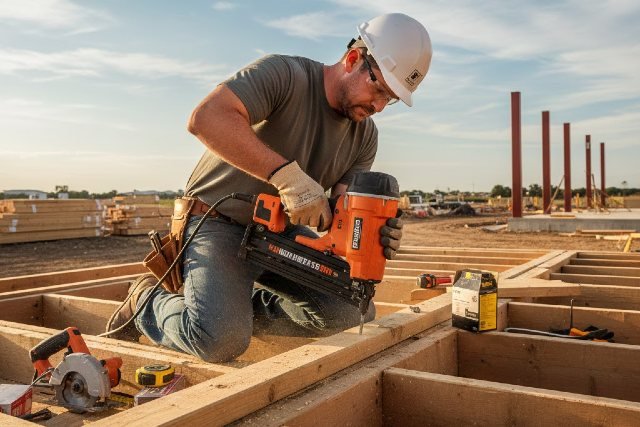

A first fix nail gun is one of the most important power tools used in modern construction and structural carpentry. Designed for heavy-duty tasks such as framing, decking, stud walls, roofing, and joist work, a first fix nail gun delivers speed, strength, and consistency that manual nailing simply cannot match. For professionals and serious DIY builders, it plays a critical role in improving productivity while ensuring strong, long-lasting joints.
In this in-depth guide, you will learn exactly what a first fix nail gun is, how it works, where it is used, and how to choose the right one for your construction needs. Drawing on industry research, real-world jobsite experience, and authoritative sources, this article is written to help you make informed decisions with confidence.
What Is a First Fix Nail Gun?
A first fix nail gun is a high-powered fastening tool used during the early stages of construction, also known as “first fix” work. This stage focuses on the structural framework of a building, including timber frames, wall studs, roof trusses, and subfloors.
Unlike second fix or finishing nail guns, a first fix nail gun drives large, thick nails deep into timber. According to construction productivity studies published by the National Association of Home Builders, power nailing tools can reduce framing time by up to 50 percent compared to manual hammering, while also improving fastening consistency.
Why a First Fix Nail Gun Is Essential in Construction
Using a first fix nail gun significantly improves efficiency on busy construction sites. Framing tasks often involve thousands of nails, and driving them by hand increases fatigue and slows progress. A nail gun ensures each fastener is driven to a uniform depth, improving structural integrity.
From a safety and quality standpoint, properly driven nails reduce the risk of loose joints that may fail under load. Industry guidelines from organizations such as OSHA highlight that well-maintained power tools, when used correctly, can also reduce repetitive strain injuries among construction workers.
First Fix Nail Gun vs Second Fix Nail Gun
A first fix nail gun is specifically engineered for strength rather than finesse. It uses larger nails, typically between 50mm and 90mm, making it ideal for load-bearing structures.
By contrast, second fix nail guns are designed for finishing work like skirting boards, door frames, and trim. Understanding this distinction is critical, as using the wrong tool can compromise both safety and build quality.
Types of First Fix Nail Guns
Pneumatic First Fix Nail Gun
A pneumatic first fix nail gun is powered by compressed air and connected to an air compressor. These tools are widely used by professional builders due to their consistent power output and durability.
Pneumatic models are often lighter than cordless alternatives, making them suitable for all-day use on large framing projects. Many contractors prefer them because they perform reliably in cold conditions and high-volume environments.
Cordless First Fix Nail Gun
A cordless first fix nail gun operates using battery power, gas cartridges, or a combination of both. These models offer greater mobility, especially on sites where compressors and hoses are impractical.
While cordless nail guns have improved significantly in recent years, some trade professionals note that battery-powered models may struggle slightly with dense hardwoods. However, advancements from major tool manufacturers have narrowed this performance gap.
Common Applications of a First Fix Nail Gun
A first fix nail gun is primarily used in framing and structural construction. Typical applications include wall framing, roof truss assembly, floor joists, decking, fencing, and timber cladding frameworks.
In renovation projects, a first fix nail gun is also valuable for replacing load-bearing structures or reinforcing existing frames. Builders often rely on it during time-sensitive phases where speed and strength are critical.
How to Choose the Right First Fix Nail Gun
Selecting the right first fix nail gun depends on several factors, including project scale, material type, and working environment. Nail size compatibility is a key consideration, as different guns support specific nail lengths and angles.
Build quality and safety features such as sequential firing modes, anti-dry fire protection, and depth adjustment also matter. According to tool testing reviews published by professional trade magazines, these features significantly reduce misfires and material damage.
Safety Considerations When Using a First Fix Nail Gun
Using a first fix nail gun safely is essential due to its high driving force. Always wear appropriate personal protective equipment, including eye protection and gloves, to minimize injury risks.
Proper training and adherence to manufacturer guidelines are equally important. OSHA reports indicate that nail gun injuries often occur due to improper handling, lack of trigger discipline, or bypassing safety mechanisms.
Installation and Setup Tips for Best Performance
Before starting work, ensure the first fix nail gun is correctly set up. This includes checking nail compatibility, air pressure levels for pneumatic models, and battery charge for cordless units.
Depth adjustment should be tested on scrap wood before framing begins. This simple step ensures nails are driven flush without over-penetration, which can weaken joints or damage timber.
Real-World Scenario: Framing a Residential Extension
In a residential extension project, a framing crew replaced manual hammering with a first fix nail gun for wall and roof framing. The result was a noticeable reduction in labor time and worker fatigue.
The project manager reported improved joint consistency and faster inspection approvals, as nails were uniformly driven to code requirements. This real-world example highlights how the right tool directly impacts build quality and efficiency.
Maintenance Tips for a Long-Lasting First Fix Nail Gun
Regular maintenance ensures your first fix nail gun performs reliably over time. Cleaning dust and debris from the magazine and firing mechanism prevents jams and misfires.
Lubrication, particularly for pneumatic models, is critical. Tool manufacturers and trade experts recommend following maintenance schedules outlined in user manuals to extend tool lifespan and maintain safety standards.
Frequently Asked Questions About First Fix Nail Guns
What is a first fix nail gun used for?
A first fix nail gun is used for structural tasks such as framing, decking, joists, and timber construction where strong, deep fastening is required.
Can beginners use a first fix nail gun?
Yes, beginners can use a first fix nail gun with proper training and safety precautions, though professional supervision is recommended for large projects.
Is a first fix nail gun better than hammering?
For construction and framing work, a first fix nail gun is significantly faster, more consistent, and less physically demanding than manual hammering.
Conclusion: Why a First Fix Nail Gun Is a Must-Have Tool
A first fix nail gun is an indispensable tool for anyone involved in framing and construction. It combines power, precision, and productivity, enabling faster builds without compromising structural integrity. When chosen carefully and used correctly, a first fix nail gun improves jobsite efficiency, reduces physical strain, and delivers professional-grade results.
Whether you are a seasoned contractor or a serious DIY builder, investing in the right first fix nail gun is a practical decision that pays off in speed, safety, and build quality for years to come.














Leave a comment