

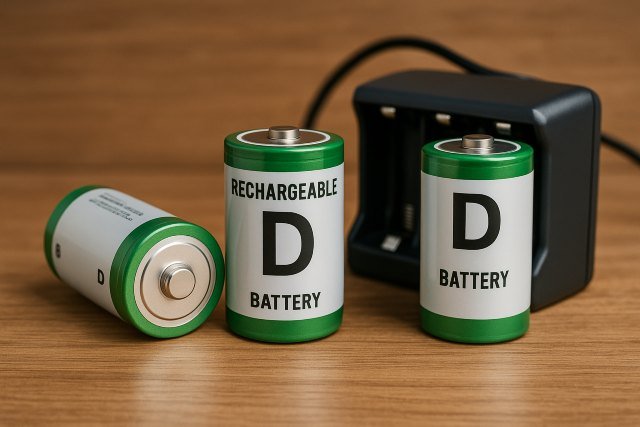

Why Rechargeable D Batteries Are the Smart Choice
If you use high-drain devices like flashlights, radios, or portable fans, you’ve probably noticed how quickly disposable D batteries run out — and how expensive replacements can be. That’s where rechargeable D batteries come in. These eco-friendly power sources can be recharged hundreds of times, offering both cost savings and sustainability.
In this guide, we’ll break down how rechargeable D batteries work, the types available, and why switching to them is one of the smartest energy decisions you can make.
What Are Rechargeable D Batteries?
Rechargeable D batteries are large-format batteries (typically 1.2 volts) designed to be used, recharged, and reused multiple times. Unlike disposable alkaline D cells, which are single-use, rechargeable versions use nickel-metal hydride (NiMH) or lithium-ion (Li-ion) chemistry to store and release electrical energy efficiently.
| Battery Type | Chemistry | Recharge Cycles | Typical Voltage | Best For |
|---|---|---|---|---|
| NiMH D Battery | Nickel-Metal Hydride | 500–1,000 | 1.2V | Flashlights, toys, radios |
| Li-ion D Battery | Lithium-Ion | 1,000+ | 3.6V | High-drain devices, power tools |
| NiCd D Battery | Nickel-Cadmium | 500–800 | 1.2V | Older devices, emergency lights |
How Rechargeable D Batteries Work
The core principle behind rechargeable D batteries lies in electrochemical reversibility. When you charge them, electrical energy reverses the chemical reaction that occurs during discharge. This allows electrons to flow in the opposite direction, restoring the battery’s capacity.
Here’s a simplified explanation:
- Discharging: Your device draws power as electrons move from the negative electrode (anode) to the positive electrode (cathode).
- Charging: When placed in a charger, electricity forces electrons back to the anode, resetting the battery for reuse.
- Recycling the process: This reversible cycle can happen hundreds — even thousands — of times before the battery degrades.
This process not only makes rechargeable D batteries cost-efficient but also significantly reduces waste compared to disposable options.
Types of Rechargeable D Batteries
1. NiMH (Nickel-Metal Hydride)
The most common type of rechargeable D battery, NiMH offers a great balance between capacity, safety, and price. They have no memory effect and work well in most consumer electronics.
Pros:
- Affordable and widely available
- Long lifespan (up to 1,000 charge cycles)
- Environmentally friendly (no toxic metals)
Cons:
- Gradual self-discharge over time
- Slightly lower voltage than disposables
2. Li-ion (Lithium-Ion)
Modern lithium rechargeable D batteries deliver higher voltage (3.6V) and superior energy density, making them ideal for heavy-duty applications.
Pros:
- Lightweight yet powerful
- Retains charge longer
- Fast charging and longer lifespan
Cons:
- Requires compatible charger
- More expensive upfront
3. NiCd (Nickel-Cadmium)
An older technology, now largely phased out due to cadmium’s environmental impact. Still found in legacy equipment.
Pros:
- Performs well in extreme temperatures
- Durable and stable
Cons:
- Memory effect (reduced capacity if not fully discharged)
- Toxic cadmium material
How Rechargeable D Batteries Save You Money
At first glance, rechargeable batteries cost more. But over time, they can save hundreds of dollars.
Let’s break it down:
| Battery Type | Cost per Unit | Lifespan (Cycles) | Total Energy Output | Cost per Use |
|---|---|---|---|---|
| Disposable D | $2 | 1 | 10 Wh | $2 per use |
| Rechargeable D (NiMH) | $10 | 500 | 6,000 Wh | $0.02 per use |
Example: If you replace disposable batteries in a flashlight every month, switching to rechargeable D batteries could save you $100+ per year, not including the environmental benefits.
Environmental Impact: Going Green with Rechargeable D Batteries
Switching to rechargeable D batteries dramatically cuts down on electronic waste. According to the U.S. Environmental Protection Agency (EPA), over 3 billion disposable batteries are thrown away every year — most ending up in landfills.
By reusing your batteries, you:
- Reduce landfill waste and toxic metal pollution
- Lower demand for new battery production
- Decrease your carbon footprint
For responsible disposal, always recycle old batteries through local battery recycling programs or retail drop-off locations like Best Buy or Home Depot.
Charging and Maintenance Tips
To maximize the lifespan of your rechargeable D batteries, follow these best practices:
Use a compatible smart charger – Prevents overcharging and optimizes charging cycles.
Avoid deep discharges – Try to recharge when capacity drops to 20–30%.
Store properly – Keep in a cool, dry place at about 50% charge if unused for long periods.
Clean contacts regularly – Dirt or corrosion can reduce performance.
Common Questions About Rechargeable D Batteries
1. How long do rechargeable D batteries last?
Most NiMH rechargeable D batteries last between 3 to 5 years or about 500–1,000 recharge cycles with proper care.
2. Can I use rechargeable D batteries in any device?
Yes, as long as the voltage (usually 1.2V for NiMH) matches your device’s requirements. Always check your device’s manual first.
3. Are rechargeable D batteries safe?
Absolutely — when used correctly. Modern designs include built-in protection circuits to prevent overcharging or overheating.
4. Do rechargeable D batteries lose charge when not in use?
Yes, some self-discharge naturally over time. Low Self-Discharge (LSD) models like Eneloop D retain up to 85% of their charge after a year.
Top Brands for Rechargeable D Batteries
If you’re looking for reliable performance, consider trusted brands such as:
- Panasonic Eneloop D – Long-lasting and eco-friendly
- Energizer Recharge D – Widely available, strong capacity
- Tenergy Premium D – Affordable and consistent output
- Amazon Basics NiMH D – Great budget-friendly choice
Conclusion: Power Smart, Save More
Making the switch to rechargeable D batteries is a simple, sustainable way to cut costs and reduce environmental impact. With proper use and care, these powerful cells can deliver reliable energy for years — making them a true win-win for your wallet and the planet.
If you’re ready to power your devices smarter, start with high-quality rechargeable D batteries and enjoy the freedom of sustainable energy today.











Leave a comment