

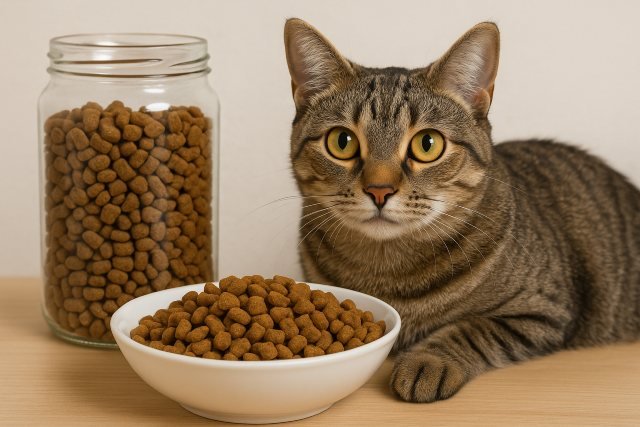

When it comes to feeding your cat, dry cat food (also known as kibble) remains one of the most popular and convenient options among pet owners. But what exactly is dry cat food, and why do so many cat parents choose it over wet varieties?
In this guide, we’ll explore the benefits, ingredients, and how to choose the best dry cat food for your feline companion — helping you make informed, vet-approved decisions that support your cat’s overall health and happiness.
What Is Dry Cat Food?
Dry cat food is a type of commercial feline diet that contains roughly 10% moisture or less. It’s made by combining meat, grains, vitamins, and minerals into a dough-like mixture, which is then cooked and shaped into crunchy pellets known as kibble.
The low moisture content allows for a long shelf life and easy storage, making it an affordable and practical choice for many cat owners. It’s also convenient for free-feeding, as kibble can be left out without spoiling quickly.
Benefits of Dry Cat Food
Choosing the right dry cat food can offer several advantages for both cats and their owners. Here are the most notable benefits:
1. Convenience and Long Shelf Life
Dry cat food doesn’t require refrigeration and can be stored easily in airtight containers. Its extended shelf life makes it ideal for busy households.
2. Supports Dental Health
The crunchy texture of kibble helps reduce plaque and tartar buildup, promoting better oral hygiene. While it’s not a replacement for brushing, it can help maintain cleaner teeth.
3. Cost-Effective
Compared to wet food, dry cat food is more budget-friendly while still offering balanced nutrition, especially if you select high-quality brands.
4. Portion Control and Free-Feeding
It’s easy to measure portions or allow for grazing throughout the day without worrying about spoilage.
5. Nutrient-Dense
Premium dry foods are formulated to provide complete and balanced nutrition, supporting healthy skin, coat, and energy levels.
Key Ingredients in Dry Cat Food
Understanding the ingredients in your cat’s kibble is crucial for choosing a healthy option. Here’s a breakdown of what to look for:
| Ingredient Type | Role in Nutrition | Example Sources |
|---|---|---|
| Protein | Builds muscles, repairs tissues | Chicken, turkey, fish, beef |
| Fats | Provides energy, maintains skin & coat | Salmon oil, chicken fat |
| Carbohydrates | Adds fiber, aids digestion | Brown rice, sweet potatoes |
| Vitamins & Minerals | Supports immune & organ function | Taurine, vitamin E, zinc |
| Fiber | Helps digestion & prevents hairballs | Beet pulp, pea fiber |
Pro Tip: Always look for named animal proteins (like “chicken” or “salmon”) as the first ingredient — not vague labels like “meat meal.”
How to Choose the Best Dry Cat Food
Selecting the right kibble for your cat depends on factors like age, lifestyle, and health condition. Follow these expert tips:
1. Check the Label
Look for the statement:
“Complete and balanced nutrition for cats” — as certified by the AAFCO (Association of American Feed Control Officials).
This ensures the food meets essential dietary standards.
2. Match Life Stage & Health Needs
Cats have different nutritional requirements based on age and activity level:
- Kittens: Higher protein & fat for growth.
- Adults: Balanced nutrients for maintenance.
- Seniors: Lower calories, added joint support.
3. Avoid Fillers & Artificial Additives
Stay away from foods that list corn, soy, or artificial colors and preservatives. They offer little nutritional value and may cause sensitivities.
4. Look for Quality Fat Sources
Healthy fats such as omega-3 and omega-6 fatty acids support skin, coat, and heart health.
5. Consider Grain-Free Options (if needed)
While not all cats require grain-free diets, they may benefit cats with allergies or digestive issues. Consult your vet before switching.
Dry vs. Wet Cat Food: Which Is Better?
| Feature | Dry Cat Food | Wet Cat Food |
|---|---|---|
| Moisture Content | ~10% | ~75% |
| Shelf Life | Long | Short |
| Cost | Economical | Expensive |
| Dental Health | Helps clean teeth | Less benefit |
| Hydration | Low | High |
| Convenience | Easy to store | Needs refrigeration |
Verdict: A combination of both dry and wet cat food often provides the best balance of hydration, nutrition, and dental support.
Common FAQs About Dry Cat Food
1. Is dry cat food healthy for cats?
Yes, when made with high-quality ingredients, dry cat food offers complete nutrition suitable for most cats.
2. How much dry food should I feed my cat?
Follow the feeding guidelines on the packaging based on your cat’s weight and age. Generally, adult cats need around 1/3 to 1/2 cup daily.
3. Can I feed only dry cat food?
Yes, but ensure your cat has access to fresh water at all times, as dry food has low moisture content.
4. What’s the best dry cat food brand?
Top-rated brands include Hill’s Science Diet, Royal Canin, Purina Pro Plan, and Blue Buffalo — known for their research-backed formulations.
Potential Drawbacks of Dry Cat Food
While dry cat food has many advantages, be aware of these possible downsides:
- Low moisture: May not suit cats prone to urinary tract issues.
- Overeating risk: Easy to overfeed, leading to obesity.
- Less aroma: Picky eaters may prefer wet food.
You can offset these issues by adding a water fountain, mixing in wet food, or using meal portions instead of free-feeding.
Final Thoughts: Is Dry Cat Food Right for Your Pet?
Choosing the best dry cat food comes down to understanding your cat’s individual needs and reading ingredient labels carefully.
Look for high-quality protein sources, essential vitamins, and no artificial fillers. Combine it with proper hydration and regular vet checkups for a long, healthy feline life.
















Leave a comment