

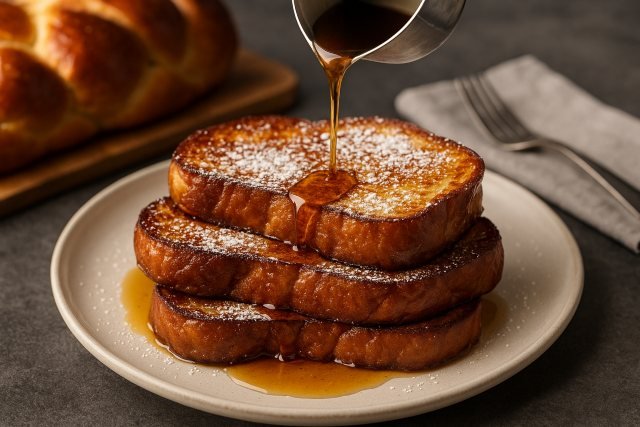

Making challah French toast the right way is all about technique — how you slice the challah, how you mix the custard, how long you soak it, and how gently you cook it. Unlike regular French toast, challah has a rich, eggy structure that absorbs custard beautifully without falling apart. When prepared with chef-approved methods, it develops a crispy exterior, creamy center, and deep caramelized flavor that elevates brunch to a restaurant-quality experience.
This guide covers everything you need to know about making perfect challah French toast, including custard ratios, pan temperature, soaking techniques, the best toppings, chef tips, and FAQs.
Why Challah Makes the Best French Toast
Challah’s structure makes it uniquely ideal for challah French toast. Because it’s enriched with eggs and slightly sweet, it absorbs custard without becoming mushy — a challenge with standard sandwich bread.
Key Advantages of Challah:
- Brioche-like richness
- Soft interior with crisp crust
- Absorbs custard evenly
- Holds shape during frying
Many chefs — including those interviewed in cooking resources such as Serious Eats and America’s Test Kitchen—agree that enriched breads like challah or brioche produce the best French toast.
Chef-Approved Ingredients for Elite Challah French Toast
A great dish starts with great ingredients.
Essential Ingredients:
- Thick-cut challah bread
- Whole milk or half-and-half
- Eggs
- Sugar (white or brown)
- Vanilla extract
- Salt
- Unsalted butter
Optional Enhancements:
- Heavy cream (richer custard)
- Orange zest
- Cinnamon or nutmeg
- Maple syrup
- Honey
How Thick to Slice Challah (Chef Recommendation)
For flawless challah French toast, slice your bread:
Optimal Thickness: 3/4 to 1 inch (2–2.5 cm)
Too thin = soggy
Too thick = undercooked center
Pro chefs recommend slicing loaf pieces manually rather than using pre-sliced challah, ensuring even thickness and better absorption.
The Perfect Custard Ratio (For Restaurant-Level Results)
Custard is the foundation of great French toast. Too watery and your toast turns bland. Too egg-heavy and it tastes like scrambled eggs.
Chef-Approved Custard Ratio
For 4 slices of challah:
| Ingredient | Amount |
|---|---|
| Eggs | 3 large |
| Whole Milk or Half-and-Half | 1 cup |
| Sugar | 1–2 tbsp |
| Vanilla | 1–2 tsp |
| Salt | Pinch |
This ratio yields a custard that’s rich, silky, and perfectly balanced.
Why These Ratios Work:
- Eggs thicken and bind the custard
- Milk adds moisture and creaminess
- Sugar caramelizes for golden crust
- Salt enhances flavor
- Vanilla adds aromatic depth
Soaking Techniques for Perfect Challah French Toast
One of the most common mistakes is under-soaking or over-soaking the bread.
Chef Technique:
- Submerge challah for 15–25 seconds per side
- Let sit for 1–2 minutes after soaking to fully hydrate
Why This Works:
Challah absorbs custard quickly, but giving it time ensures the center becomes custard-rich without falling apart.
Pan Temperature & Cooking Method (Chef-Level Precision)
Heat control separates home cooks from restaurant pros.
Ideal Temperature:
Medium to medium-low heat
Step-by-Step Cooking:
- Heat butter in a nonstick or cast-iron skillet.
- Add soaked challah slices.
- Cook 3–4 minutes each side, until golden brown.
- Don’t press the toast — let it rise naturally.
- Replenish butter between batches for even browning.
Chef Tip:
Use a mix of butter + a little oil to prevent burning while keeping buttery flavor.
Best Toppings for Challah French Toast
When making chef-approved challah French toast, toppings matter.
Classic Toppings:
- Maple syrup
- Powdered sugar
- Fresh berries
- Whipped cream
Elevated Chef Toppings:
- Mascarpone cream
- Caramelized bananas
- Berry compote
- Honey butter
- Toasted almonds or pistachios
Flavor Variations:
- Nutella drizzle
- Cinnamon sugar
- Citrus zest
- Bourbon vanilla syrup
Common Mistakes to Avoid
1. Soaking too long
Leads to mushy centers.
2. Skipping the salt
Salt crucially balances sweetness.
3. Pan too hot
Burns outside before inside cooks.
4. Using fresh bread
Day-old challah absorbs custard better.
5. Overcrowding the pan
Prevents browning and causes steaming.
Sample Recipe: Challah French Toast Done Right
Ingredients:
- 4 thick challah slices
- 3 eggs
- 1 cup whole milk
- 1 tbsp brown sugar
- 1 tsp vanilla
- Pinch of salt
- Butter for frying
Steps:
- Whisk custard ingredients.
- Dip challah slices 20 seconds per side.
- Rest 1 minute.
- Fry in butter at medium heat 3–4 mins per side.
- Top and serve.
Frequently Asked Questions (FAQ)
1. What makes challah better than brioche for French toast?
Challah has a slightly firmer crumb, meaning it holds custard without collapsing.
2. Why does my French toast come out soggy?
Over-soaking, too low heat, or too much dairy in the custard.
3. Can I make challah French toast ahead of time?
Yes — par-cook slices and reheat in a low oven for service.
4. Can I use plant-based milk?
Yes — oat milk and almond milk work well but produce slightly lighter custard.
Conclusion: Make Challah French Toast Like a Chef
With the right ingredients, custard ratio, soaking timing, and heat control, anyone can prepare challah French toast that rivals top brunch restaurants. The key is respecting the bread, using properly balanced custard, and cooking the slices low and slow for deep caramelization and a creamy interior.
Whether you’re serving it for a relaxed weekend brunch or impressing guests, using chef-approved techniques ensures your challah French toast turns out perfect every time.













Leave a comment